Public ministry-page concept by Vessel Media View the case study
All messages
Summer in the Psalms · July 19, 2026

Praising God in Difficult Times

Psalm 150 calls everything with breath to praise the Lord. Pastor Jonathan explores what that invitation means when life is painful, uncertain or unresolved: praise does not erase hardship, but anchors the heart in the unchanging goodness of God. Through David, Jehoshaphat, Paul and Silas, the message shows praise as a faithful response before the outcome is visible.

Speaker
Pastor Jonathan
Scripture
Psalm 150 · 2 Chronicles 20:18–19
CCONVERGEKNOW · GROW · GO1:12
THE KEY MESSAGE
Praise does not deny the problem. It puts the problem in perspective.
Accurate sermon-derived summary · not presented as a verbatim quotation
01
WATCH THE MOMENTS

Six ways back
into the message.

02
KEY TAKEAWAYS

What to carry
into the week.

01

Praise is rooted in who God is, not in whether circumstances feel easy.

02

Praise does not deny a problem; it puts the problem in the perspective of God’s character.

03

The strength of praise comes from its object: God will not fail.

04

God welcomes wholehearted praise that uses the breath, body and gifts He has given.

05

Biblical praise often rises before deliverance is visible.

06

In hardship, believers can trust both God’s power to deliver and His promise to remain present.

03
SCRIPTURE TRAIL

Read through
the message.

01Psalm 150:1–602Psalm 71:2303Habakkuk 3:17–1804Psalm 47:105Psalm 98:6062 Samuel 6:14–22072 Chronicles 20:18–2208Exodus 1509Acts 16:25–2610Philippians 1:2111Hebrews 11:6
05
READ & REFLECT

A five-day
devotional.

5-DAY DEVOTIONAL

Praise Before the
Breakthrough

Five days of scripture, reflection and prayer drawn from "Praising God in Difficult Times." Read one day at a time, or work through them as a week.

DAY 1 OF 5

The Breath You Have

Let everything that has breath praise the Lord.Psalm 150:6

Most of us read that verse and immediately start negotiating. Everything? Even now, when the diagnosis came back and the answer is still no and the person you love won’t return your call? Even on a Tuesday when nothing is wrong exactly, but nothing feels right either?

Here’s what strikes me about Psalm 150. It isn’t the first psalm. It’s the last. The whole book gets there through lament, accusation, confusion, grief and the kind of raw honesty most of us reserve for the drive home alone. The psalms don’t pretend. They scream and argue and ask why. And then, after all of that, the final word is praise.

So this is not a command for people who have it together. It’s an invitation for everyone who is still breathing. And if you are reading this, you qualify.

The praise God asks for is not a performance of happiness you don’t have. It is a decision to tell the truth about who He is while being honest about where you are. Those two things can exist in the same breath. They do it all through Psalms. They can do it in yours.

PUT IT INTO PRACTICE

Before you read another word today, take one slow breath and name it as a gift. Then write one sentence about something that feels hard. Below it, write one sentence about something that remains true about God. Let those two sentences sit next to each other.

REFLECT

What would it mean for you to praise God today without pretending anything is easier than it is?

PRAY

God, I have breath today and I know that is from You. Help me use it honestly — not to pretend things are fine when they aren’t, but to tell the truth about who You are even when the day is hard. Teach me what praise actually is. Amen.

06
SMALL GROUP STUDY

Five sessions.
One community.

SMALL GROUP STUDY

Praise Before the Breakthrough

A 5-Session Small Group Study · This guide is designed for groups of any size — a living room, a church classroom, or a handful of people around a table. Each session runs about 60 to 90 minutes. You don’t need to be a scholar or a theologian. You need a willingness to be honest and an openness to hear what God might have to say.

SCRIPTURE
Psalm 150:1–6John 4:23–24
OPENER

Think of a time when someone genuinely thanked you — not just said “thanks,” but really expressed gratitude. What did that feel like? Why does genuine gratitude hit differently than polite acknowledgment?

DISCUSSION QUESTIONS
  1. Psalm 150 ends a book full of lament, struggle, and hard prayers. Why do you think the psalms end with praise rather than resolution? What does that say about the relationship between the two?
  2. When most people hear the word “worship,” what image comes to mind? How does that image match or differ from what Psalm 150 actually describes?
  3. Jesus told the Samaritan woman that God is looking for worshippers who worship “in spirit and in truth.” What does it mean to worship in truth — especially when the truth is that things are difficult?
  4. If praise is ultimately about God’s character and not our circumstances, how does that change the way we think about seasons when praise feels hard?
  5. What’s one thing from this passage that you hadn’t noticed or thought about before?
GROUP PRACTICE

As a group, read Psalm 150 aloud together — slowly, one verse at a time. After each verse, pause and let someone name what that verse tells us about God. At the end, sit in silence for two minutes and then close with a single sentence of prayer.

CLOSE IN PRAYER

God, we come to You as a group with different weeks behind us and different things weighing on us. We want to understand praise better — not as a feeling we have to manufacture but as a true and honest response to who You are. Teach us. Amen.

07
FROM THE BLOG

A word for
the waiting.

What If We’ve Been Waiting for the Wrong Thing?

A reflection on praise, breakthrough, and what it means to put God first

There’s a version of faith I grew up with that went something like this: if you pray hard enough and believe sincerely enough and do the right things in the right order, God will fix the thing that is broken. Praise was part of the formula. Worship enough and the breakthrough comes.

I understand why that version of faith is appealing. It gives us something to do. It makes God predictable. It turns the mystery of the divine into a transaction we can manage from our side of the counter.

But it doesn’t hold up. Not in scripture, and not in real life.

When Psalm 150 says “let everything that has breath praise the Lord,” it doesn’t say “everything that has breath and is currently experiencing answered prayer.” It says everything. Every lung. Every story. Every person sitting in a hospital waiting room at 2 a.m. who would give anything for a different kind of news.

I think we’ve been waiting for the wrong thing to start.

The praise that appears again and again in scripture — David dancing, Jehoshaphat sending the singers first, Paul and Silas at midnight — doesn’t come after the situation resolves. It comes before. Not as a means of securing the outcome, but as an act of placing God where He belongs. First. Before the answer. Before the breakthrough. Before we know how the story ends.

That is a harder kind of faith to live. It requires something more than optimism. Optimism still needs a reason to be confident. What Psalm 150 asks for is praise rooted not in what God might do but in who God is. In His faithfulness that Lamentations calls new every morning, even on mornings when Jerusalem is ash.

Here’s what changes when praise moves from a reaction to a posture: it stops being something you work up when circumstances allow, and it starts becoming the lens through which everything else gets interpreted.

Not a denial of what’s real. Not a performance of happiness you don’t have. A decision about what’s true at the deepest level — that God is good, God is faithful, God is here — and then a willingness to say so out loud, even when the rest of your life is making a different argument.

I talked to a woman recently who had been praying for something specific for eleven years. Eleven years is a long time to keep showing up. She said something I haven’t been able to stop thinking about: “I stopped waiting to feel grateful before I praised Him. I started praising Him and discovered I was more grateful than I knew.”

That’s the inversion. Praise doesn’t wait for the feeling. The feeling, often enough, follows the praise.

Whatever you’re waiting for right now — the open door, the healed relationship, the answer that hasn’t come — I’m not telling you it’s going to arrive on a timeline that makes sense to you. I don’t know that. What I do know is this: there is something you can give God right now, today, in the middle of the waiting, that has nothing to do with whether the waiting ends.

You can give Him your praise. Not because it will unlock the breakthrough. But because He is worthy of it, and because something in your own heart opens up when you do.

Let everything that has breath praise the Lord.

That means you. Right now. As you are.

This reflection is drawn from “Praising God in Difficult Times,” a message from Converge Church’s Summer in the Psalms series. The full sermon is available on YouTube.
08
USE IT TOGETHER

Discuss.
Then pray.

DISCUSSION QUESTIONS
  1. Why can it be difficult to see God as good when circumstances are painful?
  2. How is biblical praise different from pretending that a problem does not exist?
  3. Which part of Psalm 150 most challenges or encourages the way you worship?
  4. What do David, Jehoshaphat, and Paul and Silas teach us about praise before an outcome?
  5. What truth about God can your group praise Him for in this season?
  6. How can a church community help one another praise through difficult times?
PRAYER POINTS
  • Ask God for an honest view of the hardship and a faithful view of His character.
  • Thank God for specific ways He has carried, saved, healed or sustained you.
  • Pray for people who are finding praise difficult because of grief, illness or uncertainty.
  • Ask for freedom from self-consciousness and for wholehearted worship.
  • Pray that Converge Church would be a community whose praise points people to Jesus.
STRUCTURED TRANSCRIPT

Find the moment
you need.

Automatically transcribed and lightly formatted. Timestamps are approximate and open the original service for source context.

00:57:28Praising through hardship

Praise belongs in difficult situations

The message names dark and difficult days honestly, then invites praise as a way of placing the problem in the perspective of God’s goodness.

Open related clip
01:04:06God’s faithfulness

But God

Pastor Jonathan acknowledges that praise can be hard when life goes wrong and speaks from the reality of standing beside a loved one in hospital.

Open related clip
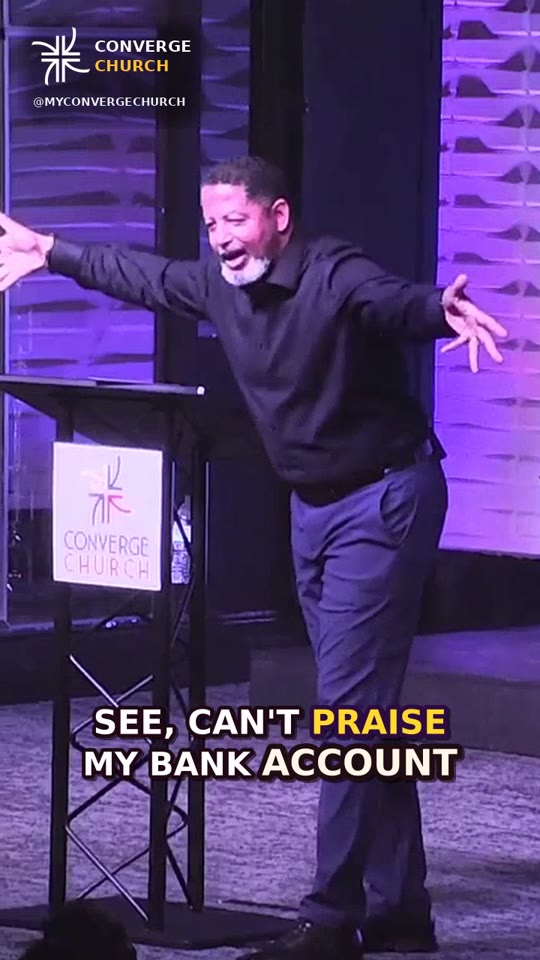
01:08:24What will not fail

The object of our praise

Money, health and human identities can let us down. The foundation of praise is God, who remains God and does not fail.

Open related clip
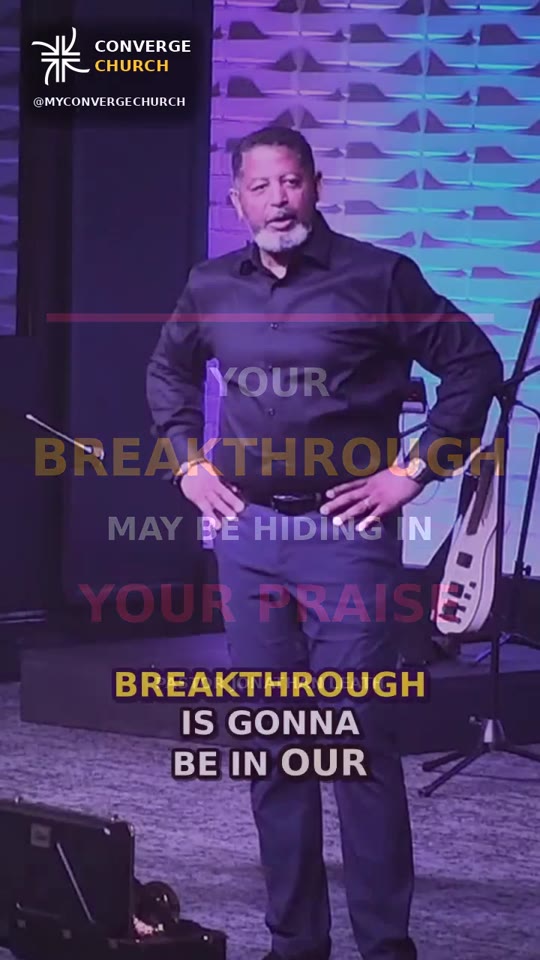
01:30:49Breakthrough through praise

Breakthrough in praise

The message moves from self-conscious worship to David’s extravagant response when the ark returned.

Open related clip
01:38:00Praise before spiritual conflict

Praise went before

Jehoshaphat’s impossible battle becomes an image of praise going before the people while God does what they cannot.

Open related clip
01:39:56Hope in hardship

Paul and Silas at midnight

Prayer and hymns rise from prison before circumstances change, showing praise as trust in God’s presence.

Open related clip
00:04:48

Good morning, Converge family. Welcome to the house of prayer this morning.

00:04:53

Boy, God is good, isn't he? We serve such a faithful,

00:04:58

He's there all the time through the thick and thin, through the hard times and good times. Amen?

00:05:05

Psalm and we're gonna worship him and rejoice today like we've never done. We're gonna lift God high, very high. Psalm seventy one twenty three.

00:05:19

My soul also which you have redeemed.

00:05:22

We are to testify to God. Amen? Amen. Let's stand, please, as we, were as we prepare for a prayer.

00:05:34

Father, we are so grateful and thankful, Lord, that you are alive, Lord. You are well. You're in this house today, Lord. And we thank you for the opportunity we have to worship you, Lord. We pray, Lord, that your will will be done in our hearts today, Lord, that you will bless us, that you'll speak to our hearts in a special way, that as we prepare our hearts for the worship, Lord, that you'll just redeem us, Lord, and strengthen us, Lord. And I pray, Lord, for the pastors he brings out the word, Lord, that you speak to his heart in the most special way.

00:06:05

And those behind the scenes that are teaching, the infants,

00:06:09

those that are, on their way, and those that'll be livestreaming, Lord. We're so thankful, Lord, that

SHARE THE MESSAGE

Send it to someone
who needs hope.