The birds came quick for grandma’s bread. Satan moves quicker for the word before it can take root.
All messages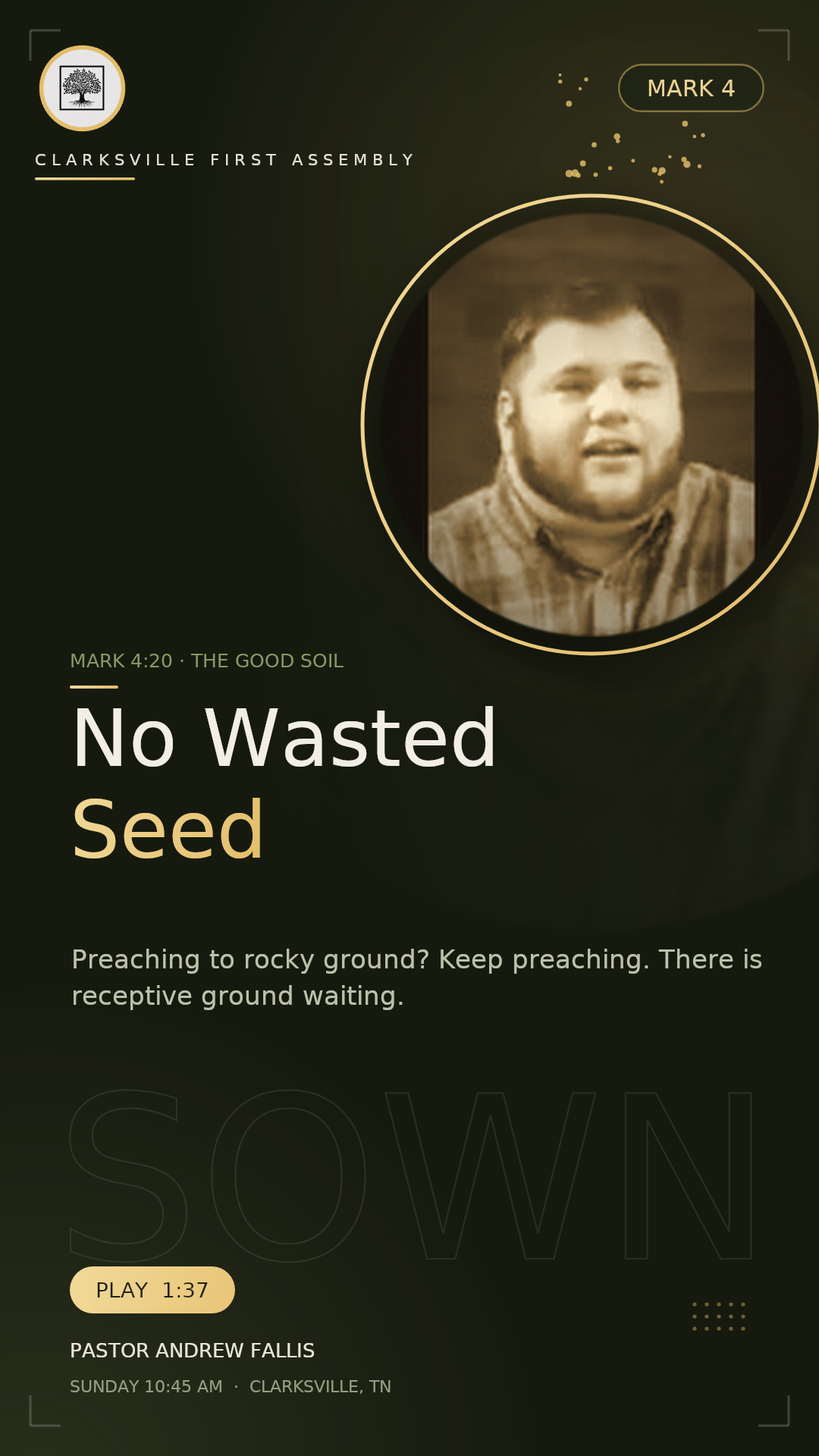
SOWN · Mark 4:1–20
The Parable of the Sower
Jesus told a farm story that explains every heart that hears a sermon. The seed never changes and the sower never changes. What changes is the ground. Pastor Andrew walks through the path, the thorns and the good soil, and lands on the promise that no faithful sowing is ever wasted.
- Speaker
- Pastor Andrew Fallis
- Role
- Associate Pastor · Youth & Young Adults
- Length
- 38:50
WATCH THE MOMENTSThree ways back
Three ways back
into the message.

KEY TAKEAWAYSWhat to carry
What to carry
into the week.
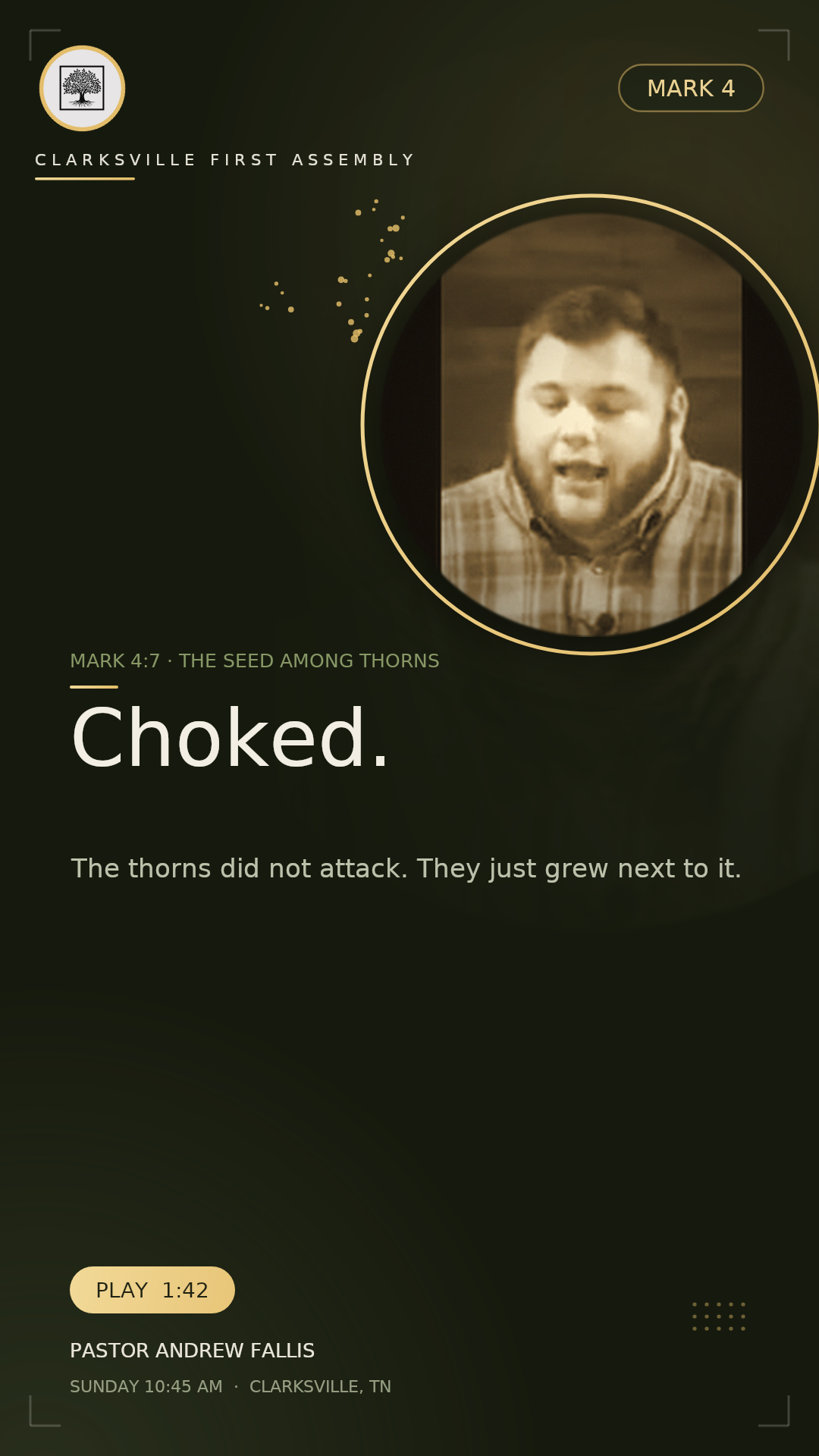
The thorns never attacked the seed. They simply grew beside it, and worry strangled what God was growing.
Wrong territory, thorny ground. Ask the Lord what needs to come into alignment before the next season of planting.
Preaching to rocky ground? Keep preaching. There is receptive ground waiting to receive the same word.
No wasted seed. One life changed means heaven is celebrating over your faithfulness.
SCRIPTURE TRAILRead through
Read through
the message.
01Mark 4:1–9 · the parable told02Mark 4:4 · the path, the birds03Mark 4:5–6 · rocky ground04Mark 4:7 · the thorns05Mark 4:14–15 · the word is the seed06Mark 4:18–19 · the worries of this age07Mark 4:20 · thirty, sixty, a hundredfold08Galatians 6:9 · do not give up
KEY MOMENTSJump straight to
Jump straight to
the turning points.
4:00Why Jesus taught in pictures
The parable opens as a story about dirt that is really a story about hearts.
6:39Grandma’s tableThe birds came fast for fresh bread. The enemy moves faster for exposed seed.
10:32“It choked it”Thorns do not strike. They coexist, and worry quietly wins.
19:00What the soil actually isJesus explains the four grounds and the condition of every listener.
28:00Thirty, sixty, a hundredfoldGood soil multiplies what it receives beyond anything the sower expected.
33:28No wasted seedKeep preaching, keep praying, keep planting. Heaven counts faithfulness, not yield charts.
SOCIAL-READY INSIGHTSShare the truth,
Share the truth,
keep the context.
 Clarksville First AssemblySermon-inspired social copy · Instagram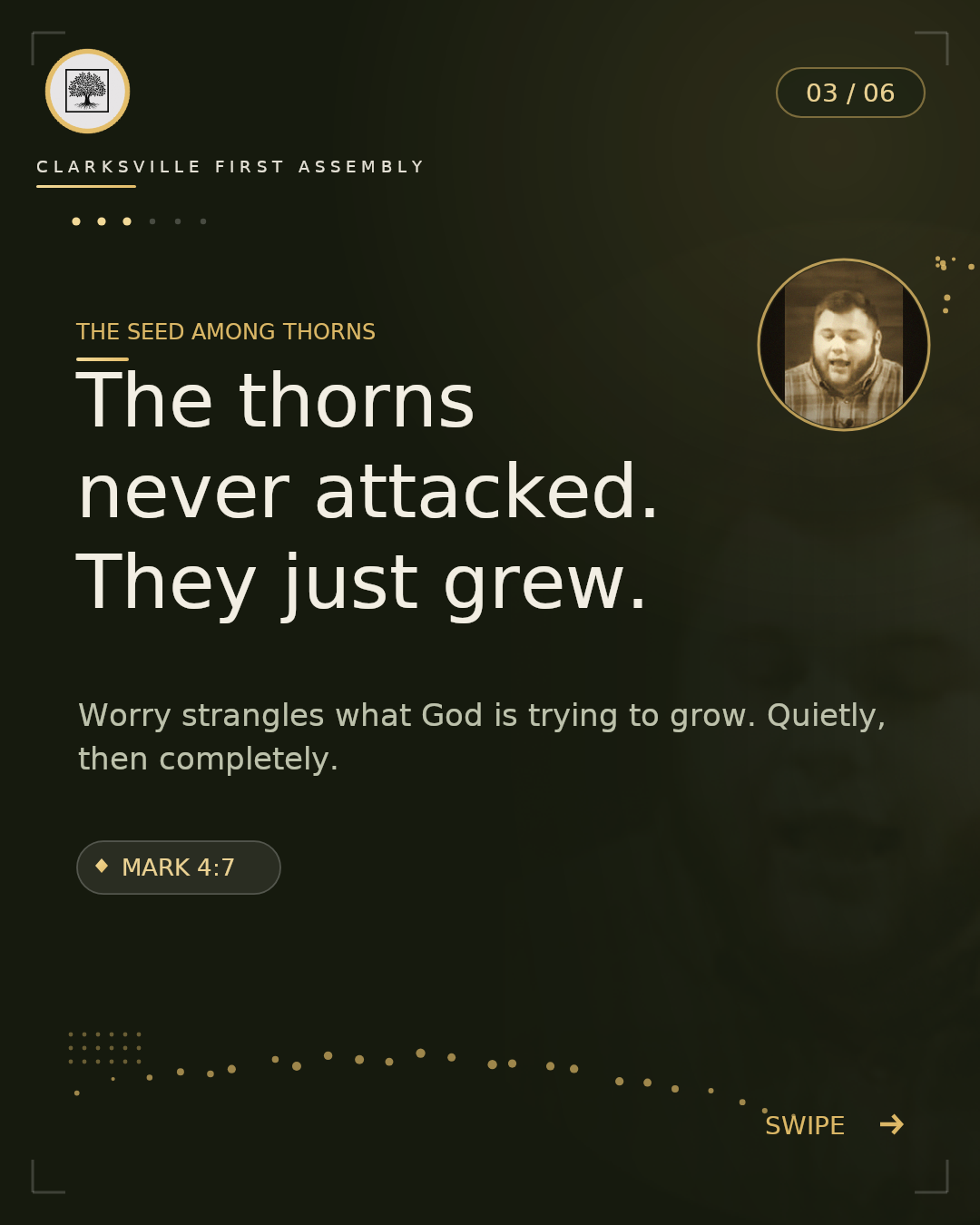
The thorns never attacked.
They just grew next to it. Worry does not fight you for the word. It simply grows alongside until the word has no room left.
Clarksville First AssemblySermon-inspired social copy · Facebook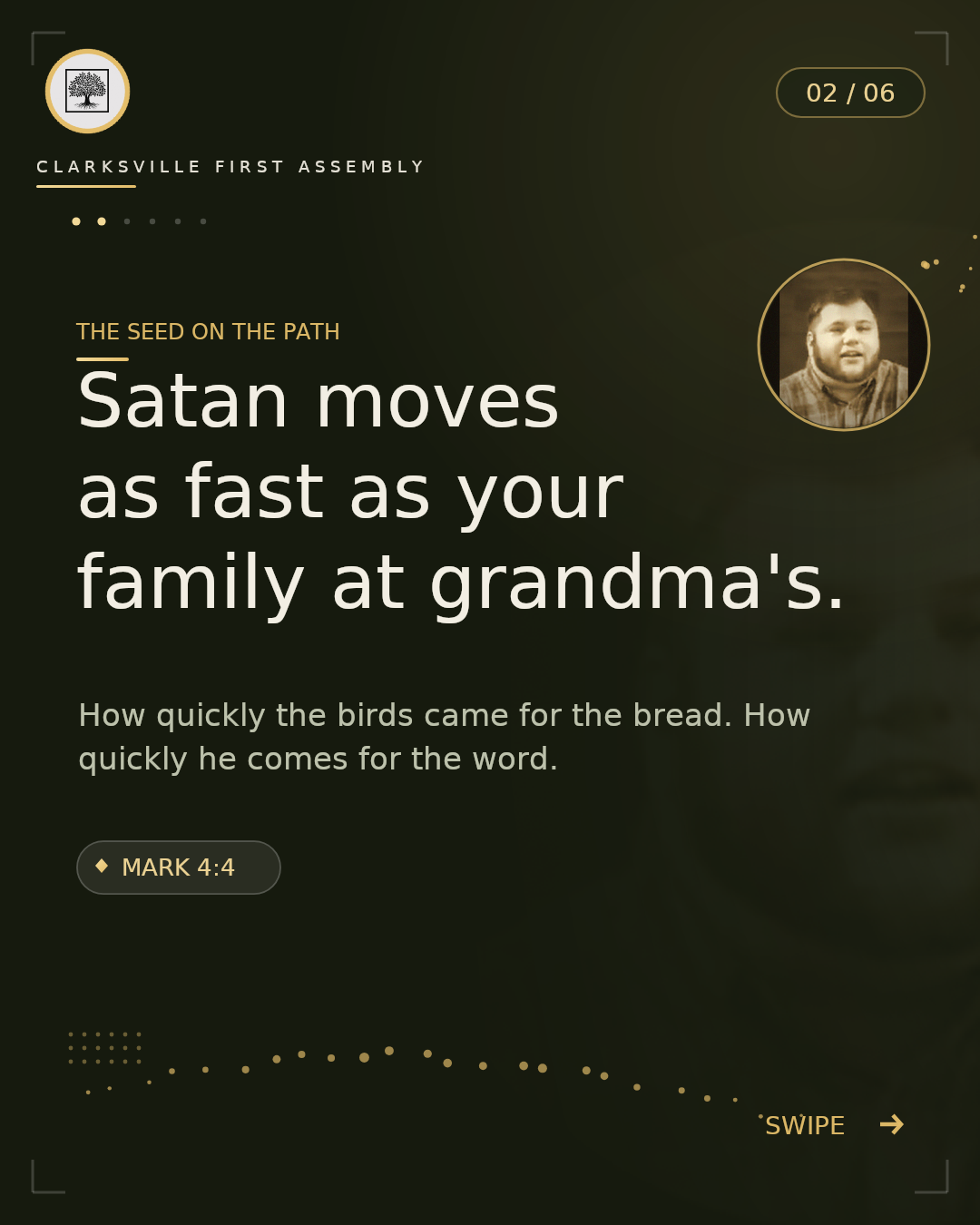
Grandma’s table never stayed full for long.
Everyone came running while it was warm. Jesus said the enemy works the same way on the word you hear Sunday. Do not let the birds beat you to it.
ClarksvilleFirst AssemblySOWN · MARK 4
No wasted seed. One life changed means heaven is celebrating over your faithfulness.
THE CAROUSEL KITSix slides.
Six slides.
One walk through the field.
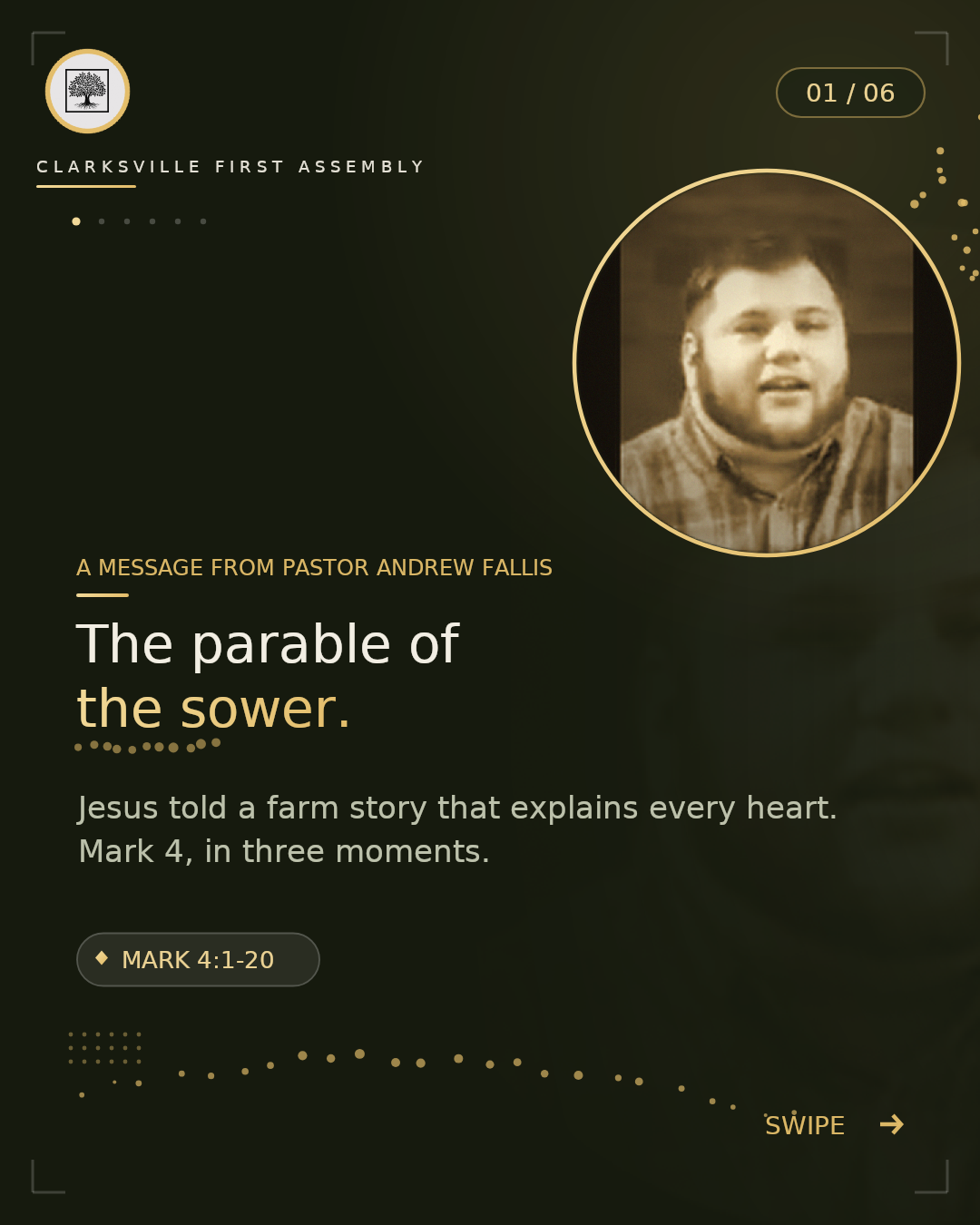
Each slide carries the pastor’s portrait and one moment from the field, built for Instagram from the message itself.
Open this slide full-sizeREAD ALL WEEKA five-day
A five-day
devotional.
Mark 4:4, 15 · Day 1
Fresh bread never lasts
As soon as they hear it, Satan comes and takes away the word that was sown in them.
Pastor Andrew told the church about his grandma’s table. Fresh bread came out and everyone came running, because everybody knows fresh bread does not wait for you. The birds knew it too. They swept in and took what was left on the path.
That is exactly how Jesus described the first kind of hearer. The word lands and the steal happens fast. Not through drama. Through distraction, usually within the hour.
So try this today. Sometime after you pray or read, pause and ask what happened to it. Did a notification take it? An argument? A hurry? Naming the bird is most of the fight.
REFLECT
- Think back to the last sermon or verse that moved you. Where did it go?
- What shows up fastest to snatch your attention after God speaks to you?
- What would one hour of protected quiet look like tomorrow morning?
PRAY
Lord, You know how quickly I lose what You give me. Slow me down today. When Your word lands, help me guard it long enough for it to sink in. Amen.
SMALL GROUP STUDYFive sessions.
Five sessions.
One community.
Opening question. Tell the group about a garden, crop or plant you have been part of, successful or not. What did it teach you?
Read together: Mark 4:1–9
- Jesus taught a huge crowd from a boat, using a farmer’s workday as the lesson. Why do you think a farming picture worked better than a straight lecture?
- Four outcomes, one seed. What stays constant across all four kinds of ground?
- Verse 9 ends with ears to hear. What does it take to actually hear a familiar story like this one?
- If the seed is the same throughout, what does that tell us about the word of God itself?
Before next week, read Mark 4 once each day. Notice which ground you recognize in yourself at different moments.
SERMON NOTESThe message,
The message,
in outline.
On a Sunday morning at Clarksville First Assembly, Pastor Andrew Fallis took the church through Jesus’ best-known farm story from Mark 4. A boat became a pulpit, a crowd became four kinds of ground, and the message landed where it always lands: on us. These notes follow the arc of the message so you can revisit it, share it or lead your family through it.
One story, four soils, one seed
Jesus described a sower who scattered everywhere, generously, without pre-sorting the ground. Seed hit the path, the rocks, the thorns and the good soil. The point Jesus made later is easy to miss: the seed never changes. The word of God is constant. What changes is the condition of the heart receiving it.
That reframes how we listen. A weak Sunday says more about the state of the ground than the skill of the sower.
The path: the snatched word
Seed on the hardened path sat exposed until the birds arrived. Pastor Andrew illustrated it from his own family history: fresh bread on grandma’s table never survived long, because everyone, feathered or otherwise, moves fast when food is out.
The enemy works the same way on the word you hear on Sunday. The steal rarely looks dramatic. It looks like a phone, an argument in the parking lot, a rushed afternoon. The defense is simple attention. Guard the first hour.
Rocky ground: joy without depth
Rocky soil grows the fastest plant in the story and loses it by noon. Joy is not the villain here. Shallow soil is. Trouble and heat simply reveal whether anything is holding below the surface.
Depth is built in private: prayer nobody sees, repentance nobody hears, scripture read with no audience. Roots before fruit. Always in that order.
The thorns: the quiet choke
Nothing attacks the seed among the thorns. The thorns just grow beside it, and worry strangles what God is trying to grow, quietly, then completely. Jesus listed worries of this age, the deceitfulness of wealth and desires for other things.
Pastor Andrew pressed the church to diagnose territory before blaming fruitfulness. Wrong territory, thorny ground. Ask the Lord what needs to come into alignment before you expect a harvest there. Weeding is uncomfortable work. It is also the difference between a crowded heart and a fruitful one.
Good soil: hundredfold ground
Good soil hears, accepts and produces thirty, sixty, a hundred times what was sown. Nobody expects those numbers from agriculture. That is the point. When the word finds room to root, God does math that farmers cannot explain.
And the sower never knows which patch of dirt is good. So he keeps scattering.
The close: no wasted seed
The message ended where every weary planter needs to stand. Preaching to rocky ground? Keep preaching. There is receptive ground waiting to receive the Jesus that lives inside of you. Praying over hard hearts? Keep praying. Heaven measures faithfulness, and one life changed means heaven is celebrating over you.
No wasted seed. Every prayer, every verse shared, every Sunday you showed up. Planted. In God’s field, none of it vanishes.
USE IT TOGETHERDiscuss.
Discuss.
Then pray.
DISCUSSION QUESTIONS
- Which of the four grounds describes you right now, and what makes you say that?
- Grandma’s bread never survived long on the table. What steals the word from you quickest?
- Name one worry acting like a thorn in your life this month. What would pulling it require?
- Who planted the seed in you before you ever showed fruit? Have you thanked them?
- Where are you called to keep sowing even though the ground looks hard?
PRAYER POINTS
- Ask the Lord to expose the thorns before they finish the strangling.
- Thank Him for every person who scattered seed into your life years ago.
- Pray for soft ground in Clarksville, for the families on Fort Campbell Blvd and beyond.
- Pray for staying power to keep planting when nothing visible is happening.