The Verse We Argue About Is a Door
On John 6:37, a memory verse, and the widest word Jesus ever said · August 25, 2026 · 6 min read
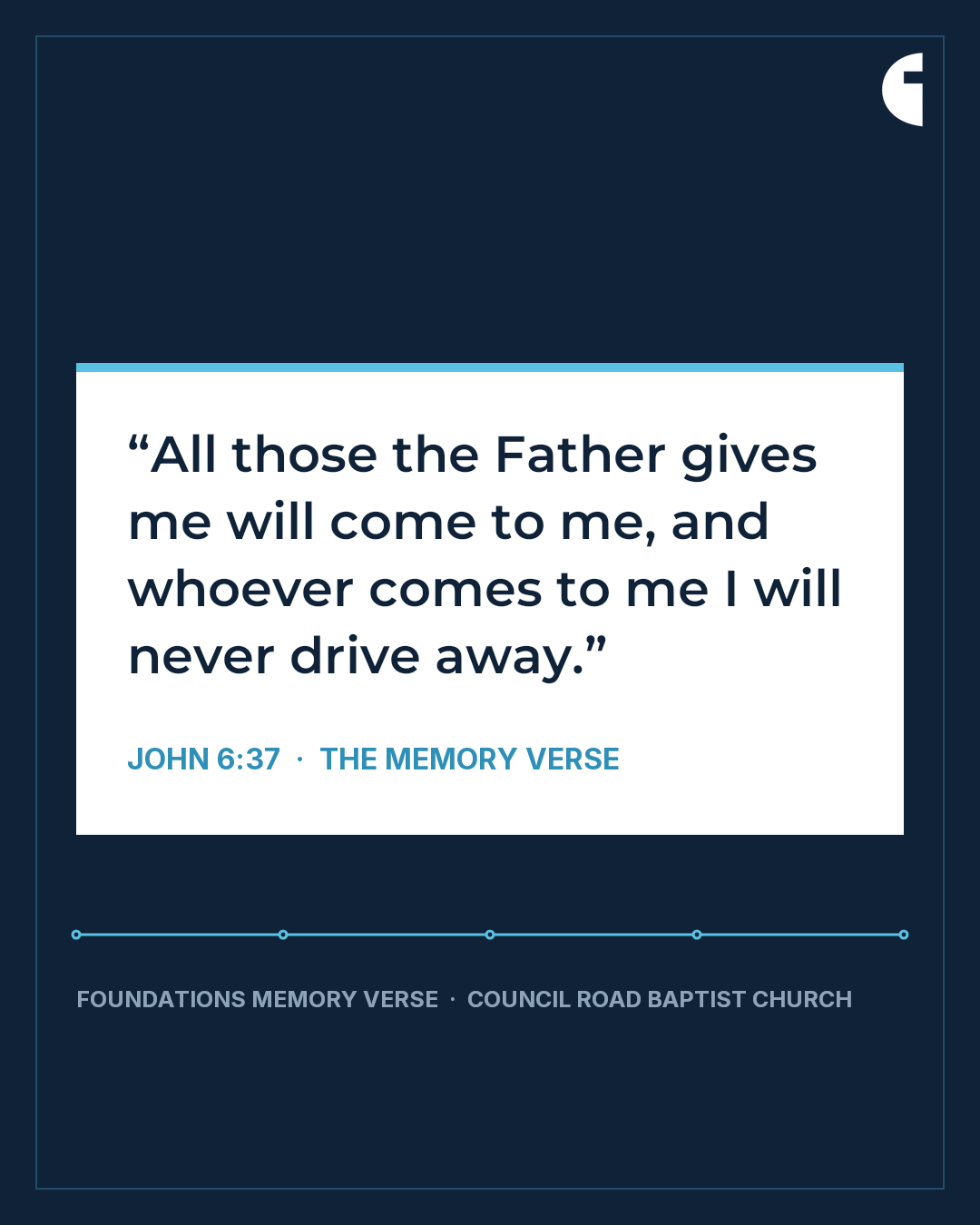
There is a strange comfort in a theological argument. Everyone picks a side, the words get precise, and for a few minutes the mystery behaves itself. John 6:37 has fed that appetite for five hundred years — all those the Father gives will come, and whoever comes will never be driven away. One half of the verse sounds like a door only some people walk through. The other half sounds like a door nobody can be kept out of. Churches have split over less.
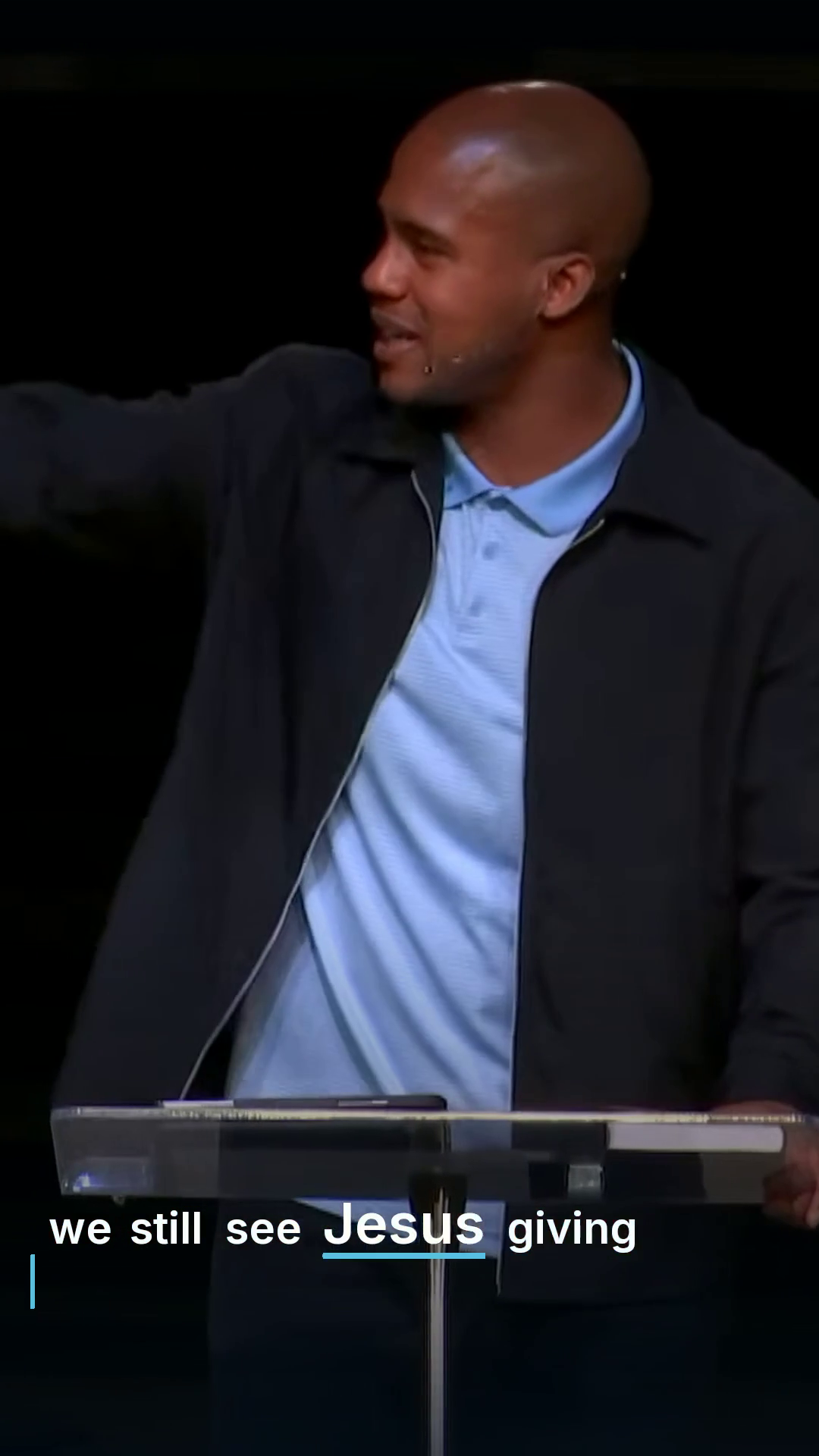
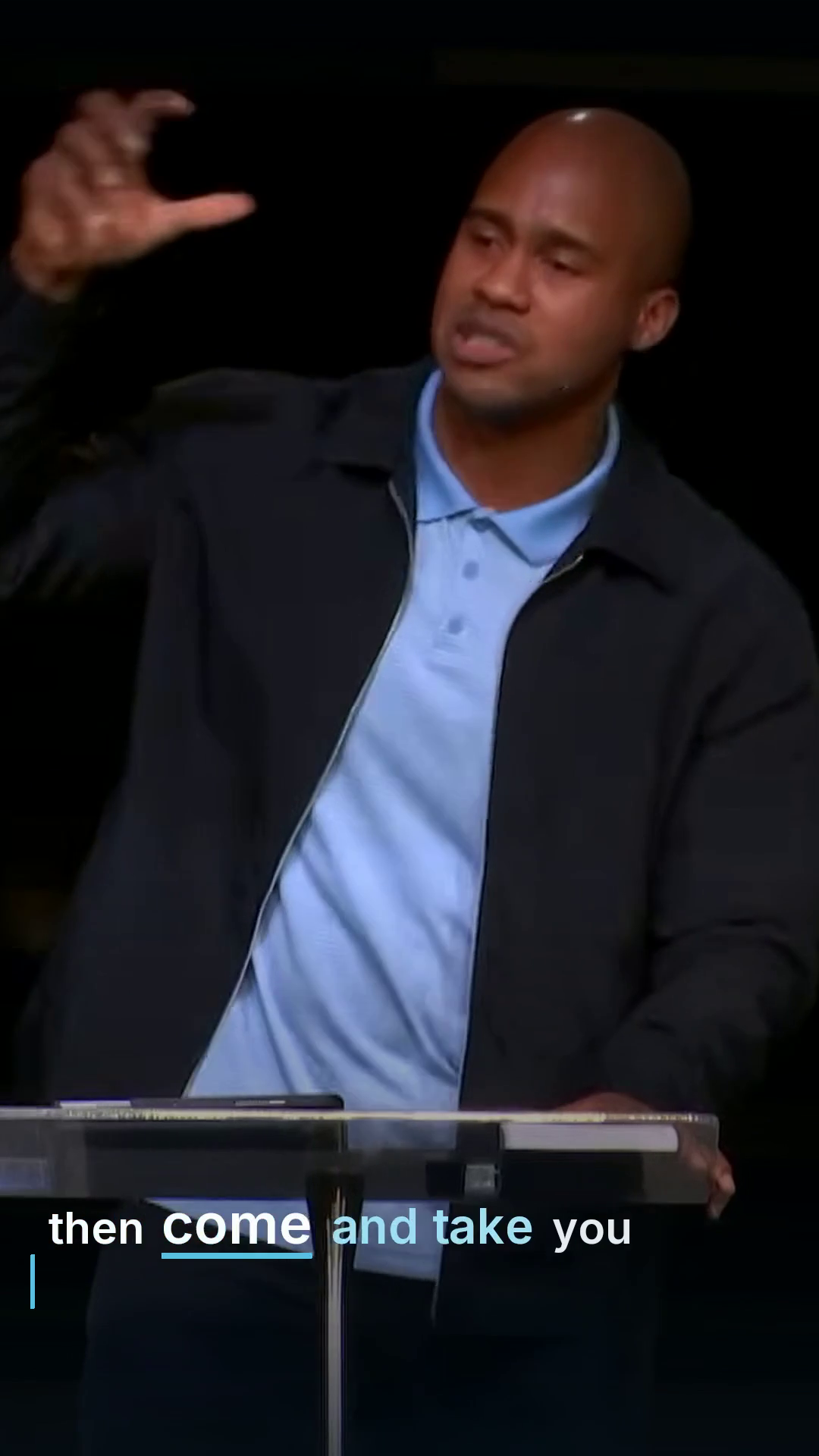
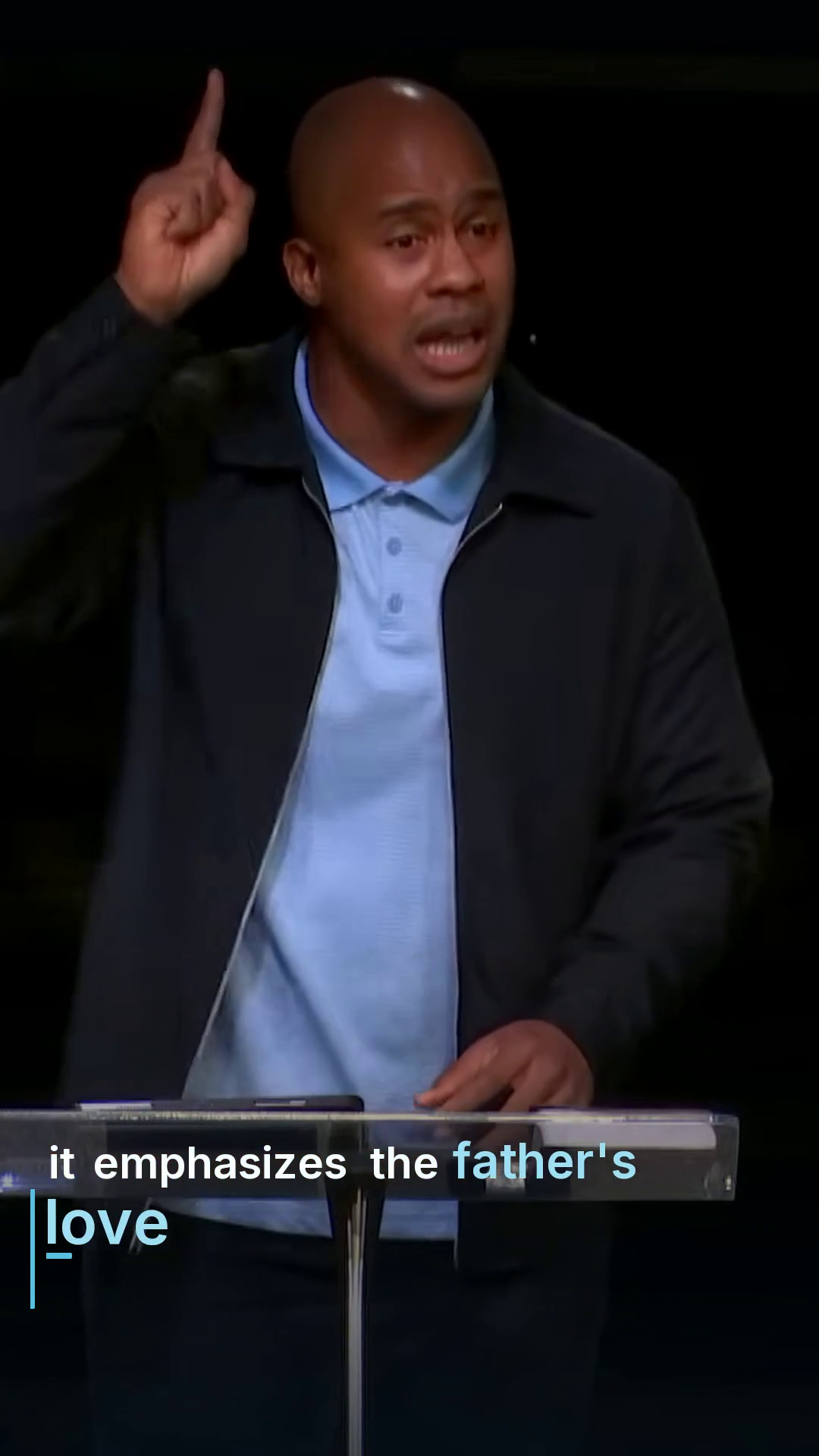
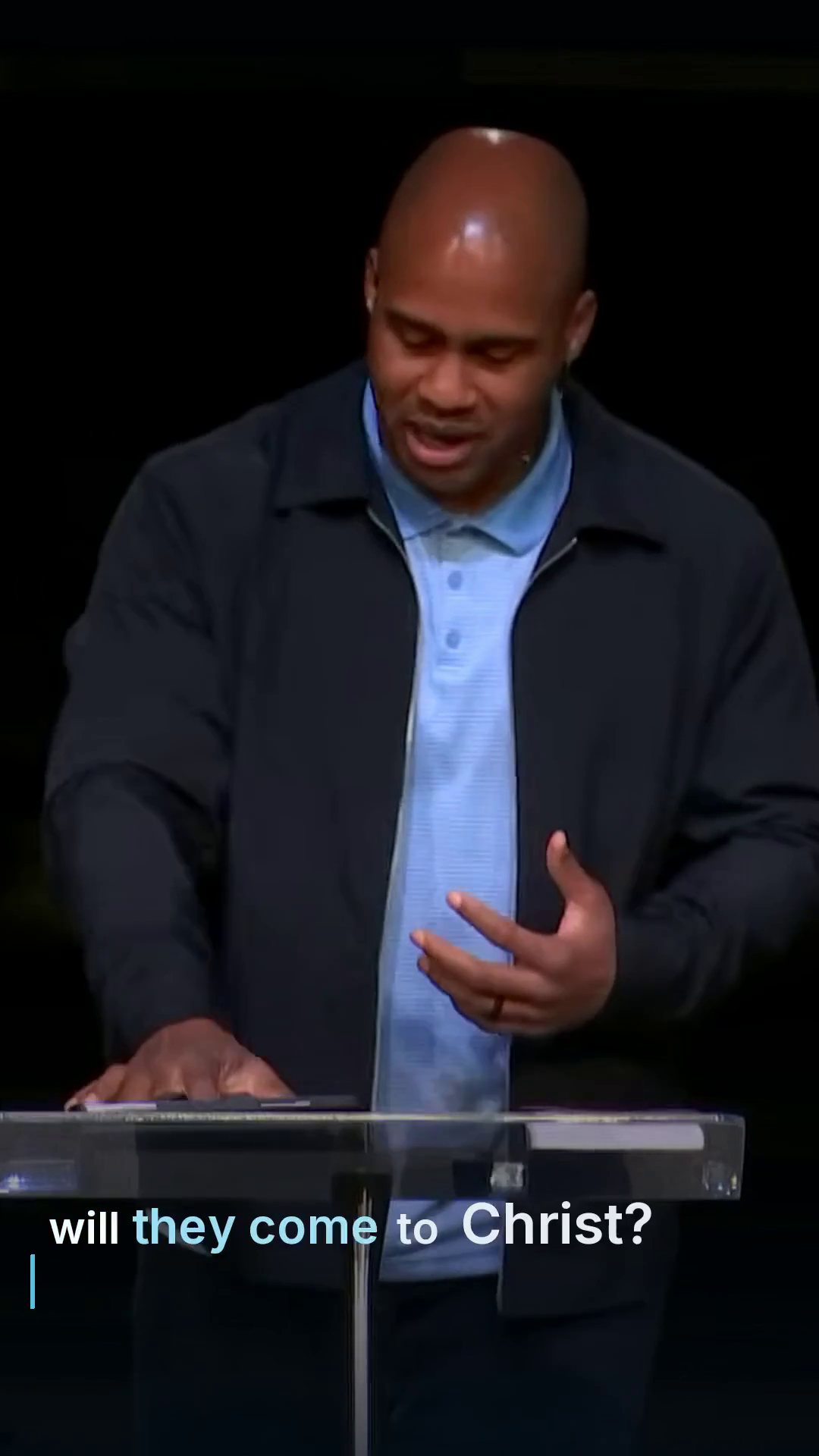
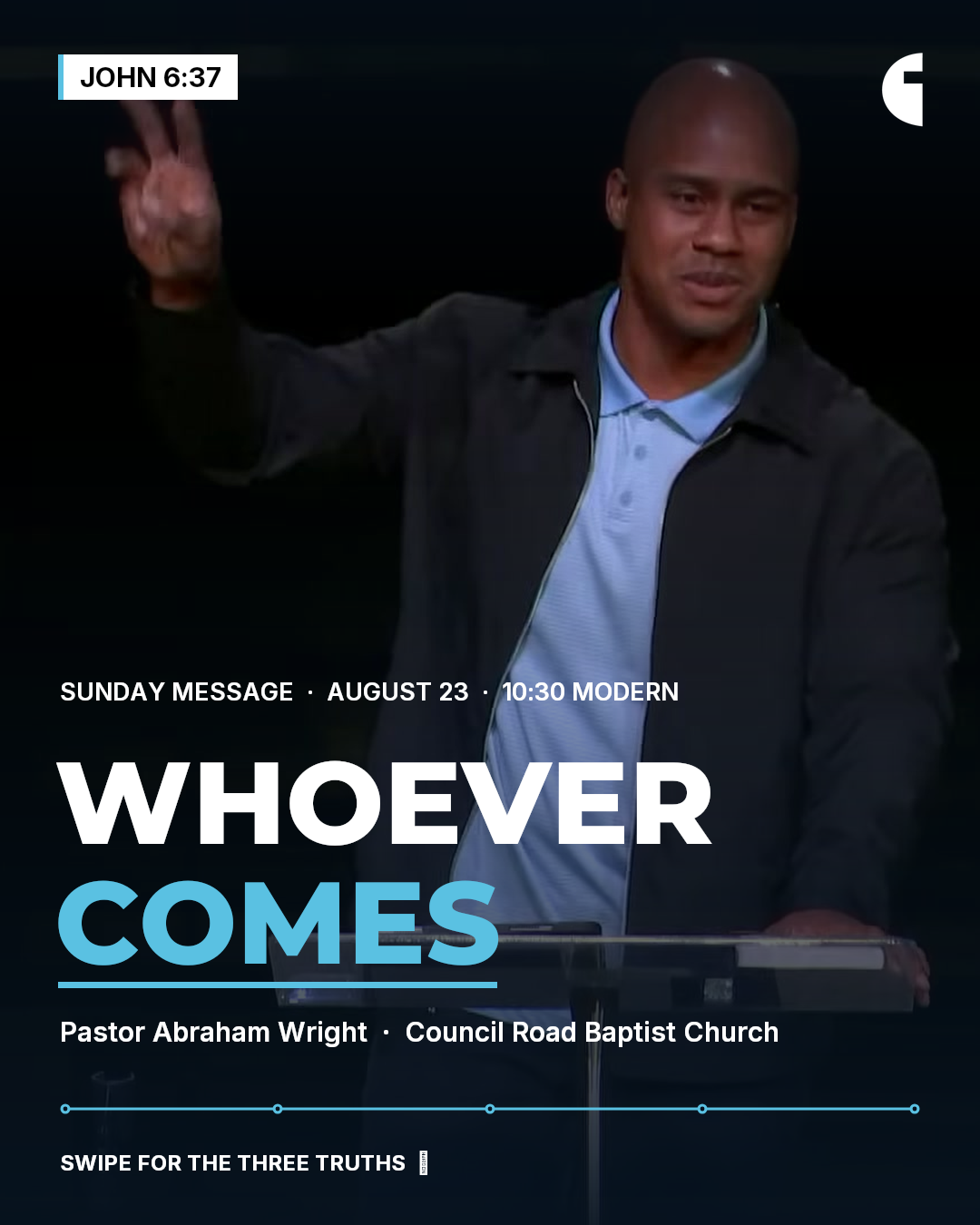
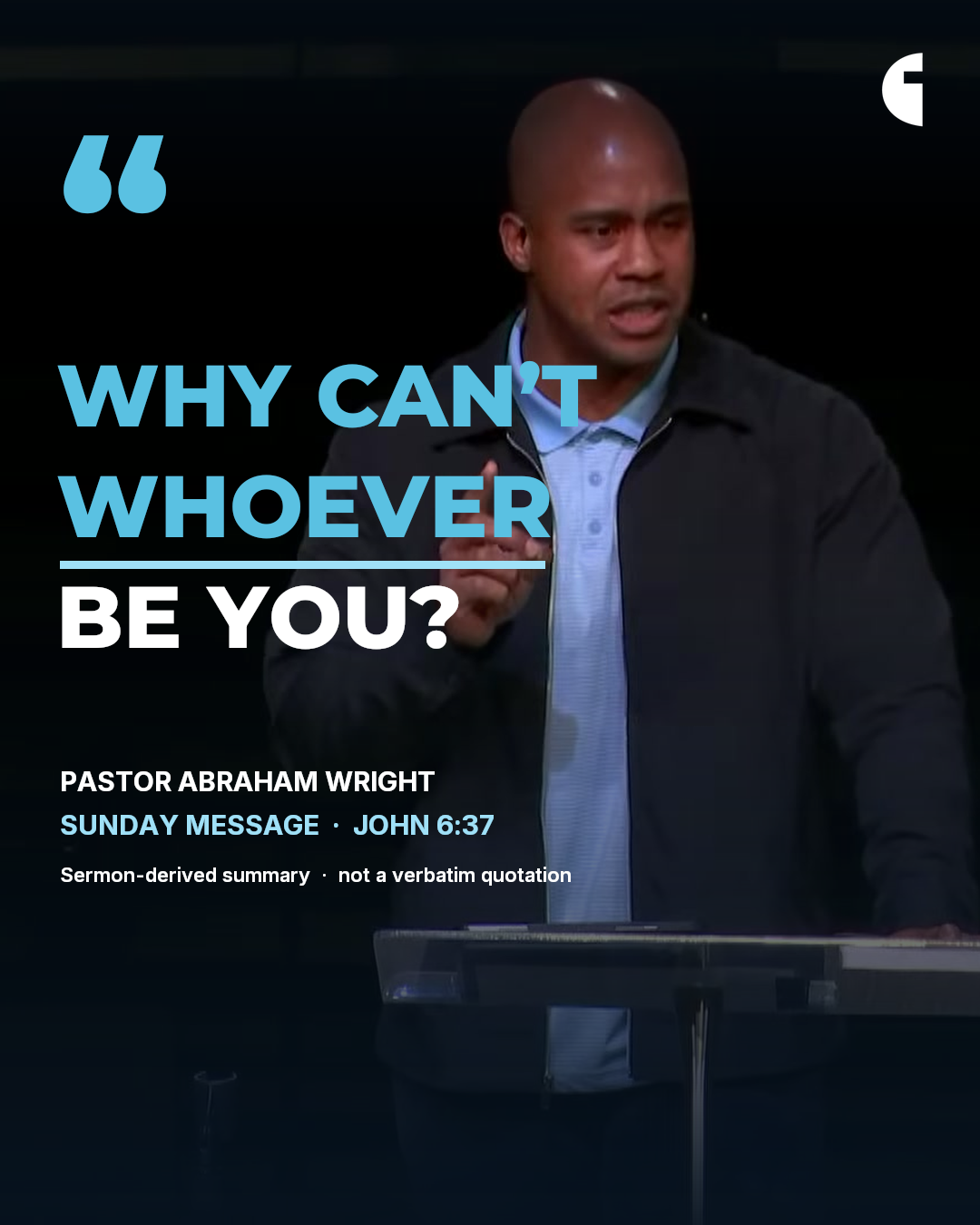
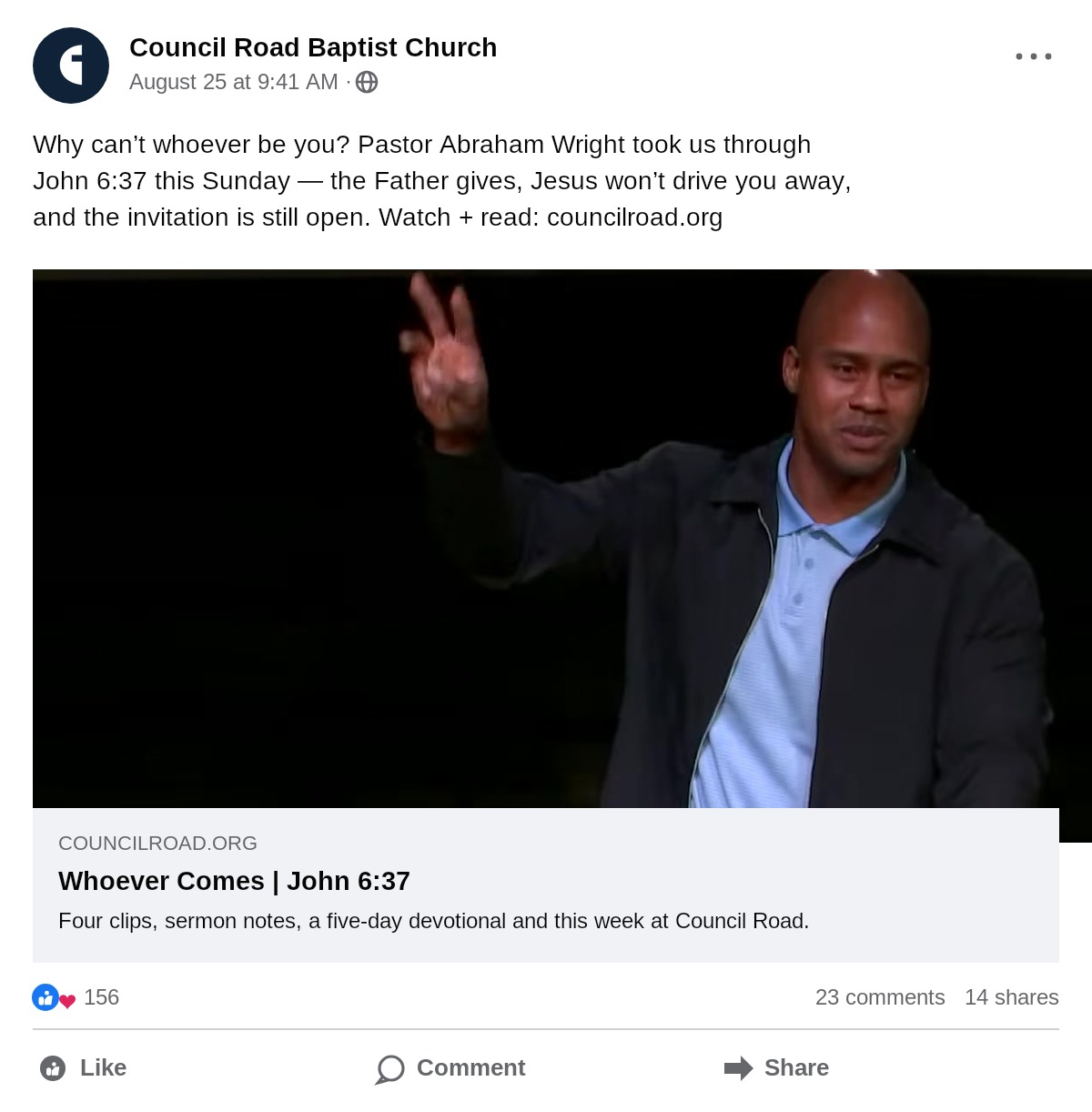
Pastor Abraham Wright stood up on Sunday and refused to do the thing preachers usually do with that verse. He didn’t sand off the edges or pretend smart, godly people don’t read it differently. He named the Calvinist reading and the non-Calvinist reading, put respected names on both columns — DeYoung, Carson, Piper over here; Flowers, Craig, N.T. Wright over there — and then did something rarer than winning: he told the truth about the disagreement, and pointed at what both sides have never stopped agreeing on.
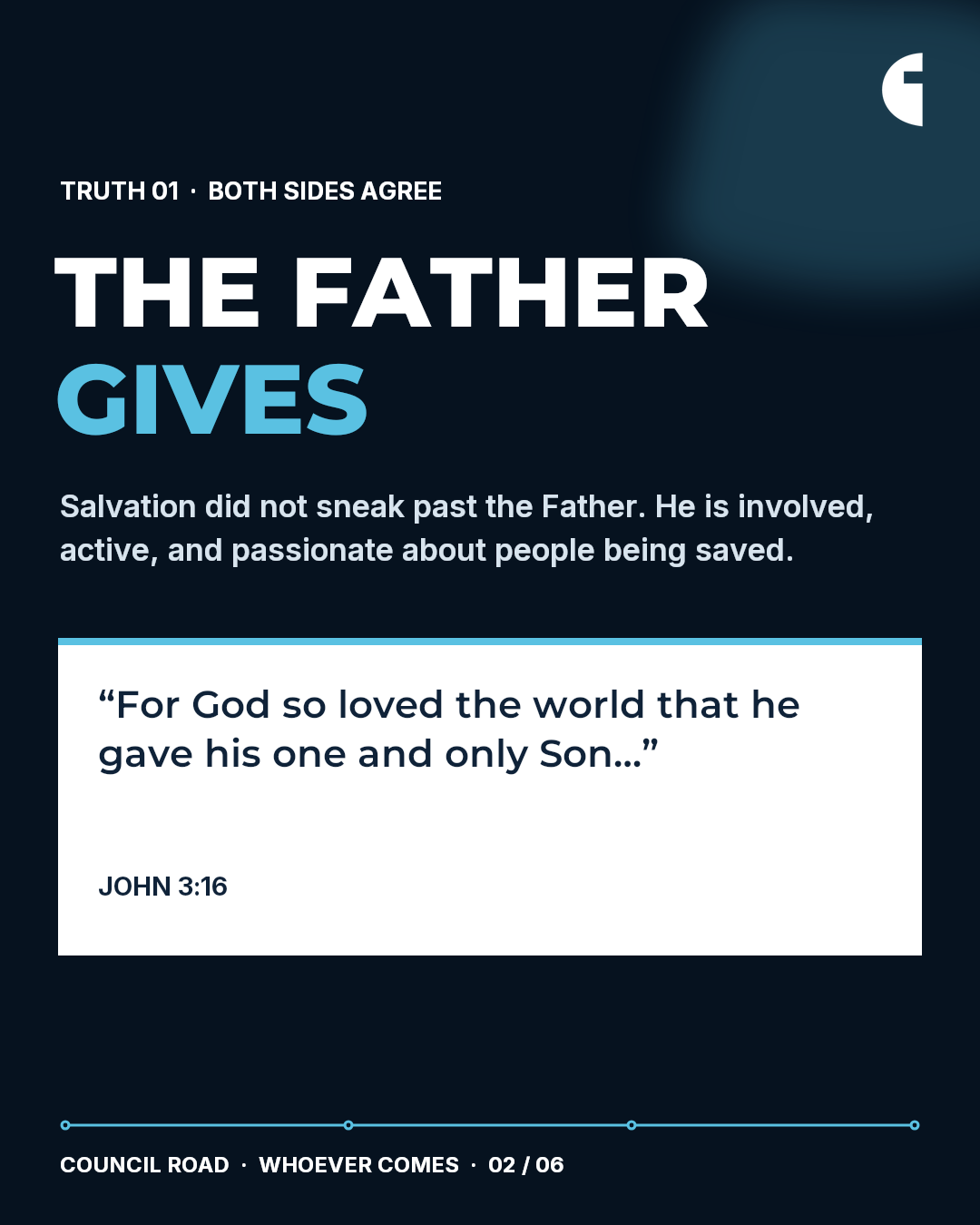
Three agreements, actually, and they are the whole sermon. The Father gives. Jesus doesn’t drive anyone away. And the church’s job is the invitation. Everything else, he seemed to say, is commentary — maybe even good commentary, the kind you can learn from on both shelves. Somewhere in the middle of it he quoted John MacArthur’s own study Bible admitting that the tension gets resolved only in the infinite mind of God, and the room laughed the way a room laughs when someone finally says the quiet part.
But the moment that stayed with me was smaller and more domestic than any of that. He told us he is bad at birthday presents. Without his wife, the kids’ parties would be modest and the gifts would surprise him as much as the children. And then: God the Father is not like that about salvation. Whatever else the verse means, it cannot mean a Father who forgot to care whether you came. The giving in John 6:37 is not a theological mechanism. It is a Father leaning in, involved and active and, in the preacher’s word, passionate.
Our job as Christians is to give people invitations to come.
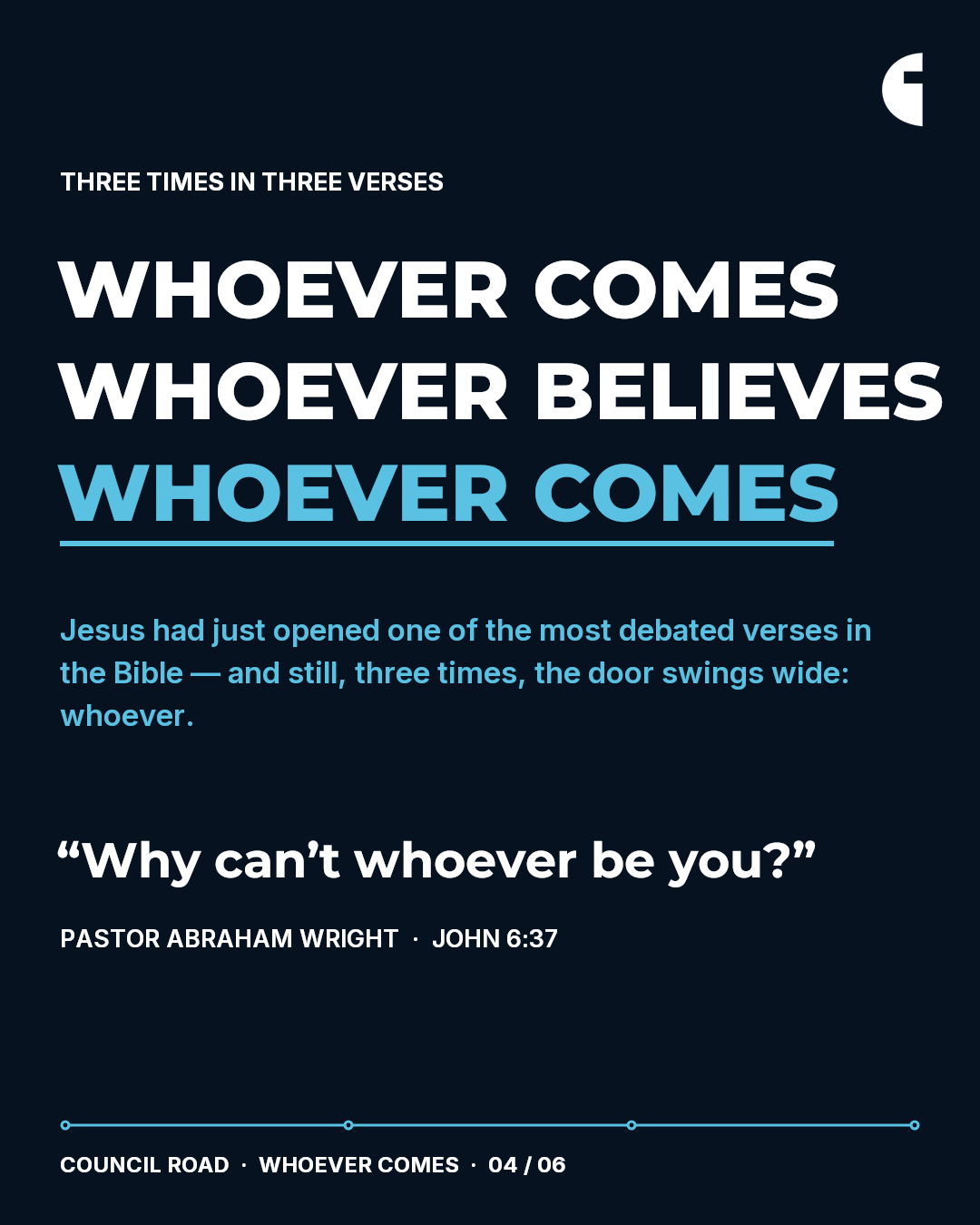
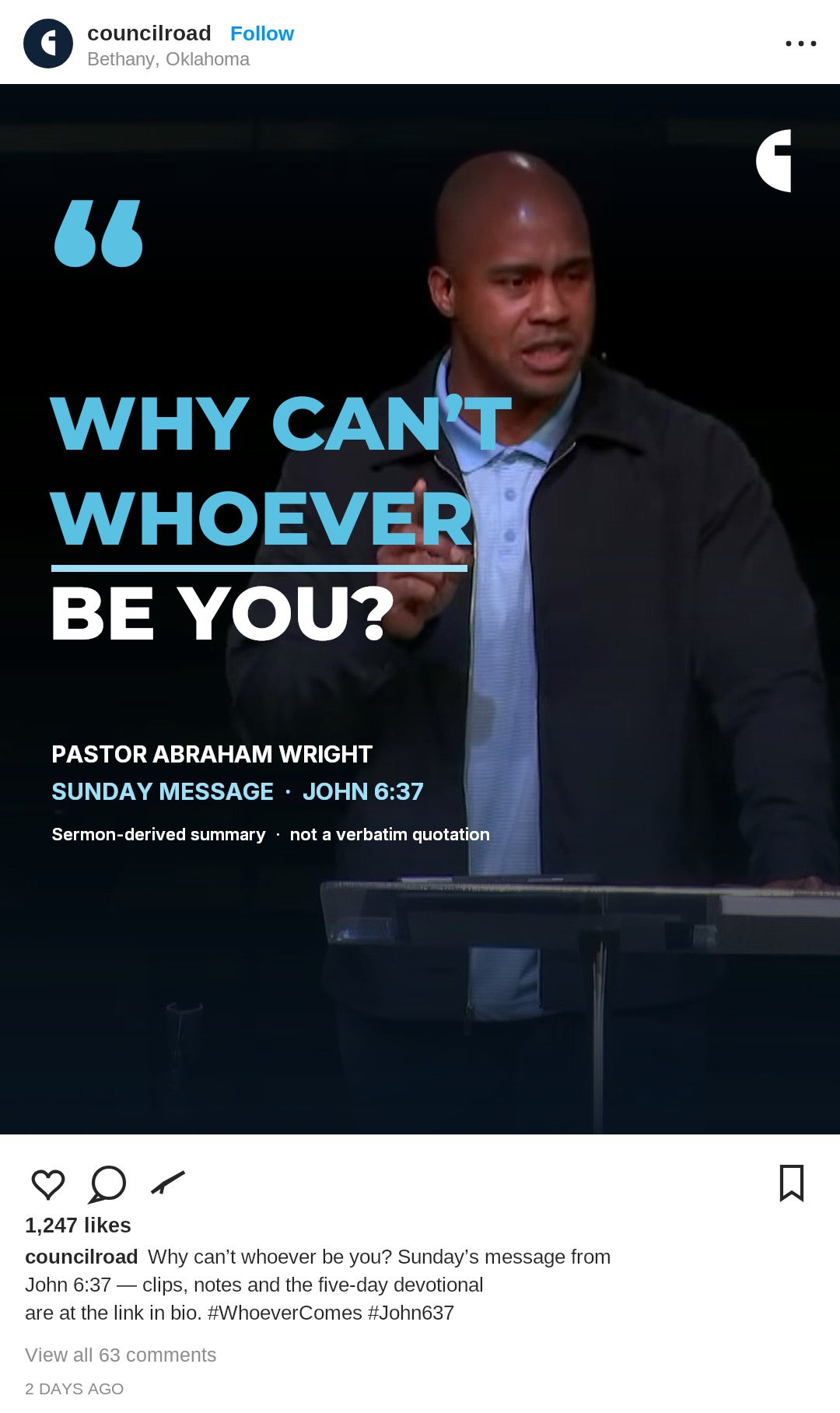
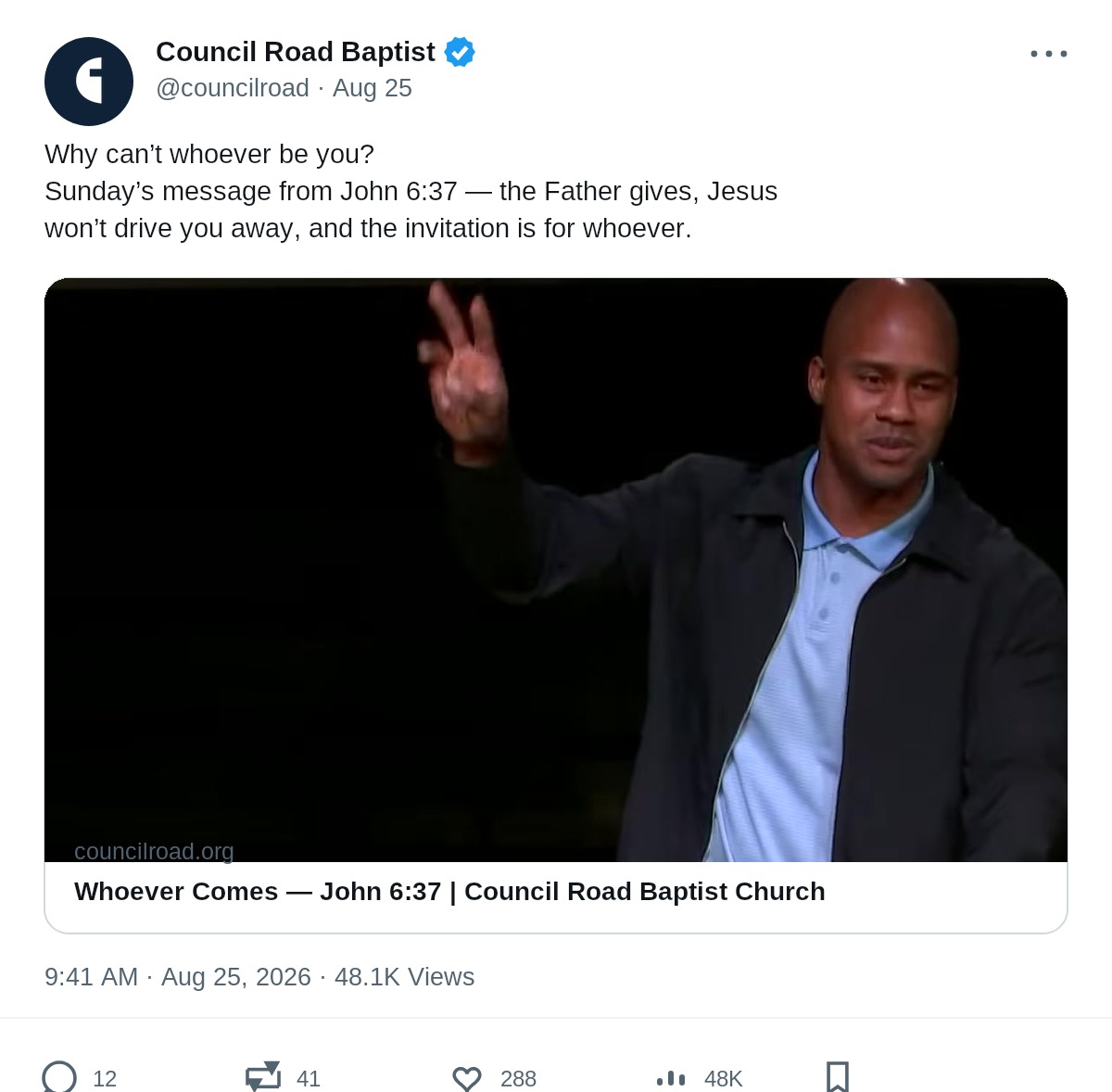
From there the verse stopped being an argument and started being a door. Three times in three sentences — whoever comes, whoever believes, whoever comes — and then the question the whole morning had been walking toward: why can’t whoever be you? He asked it the way you’d hand someone a gift rather than win a debate. It did not need to be settled. It needed to be answered.
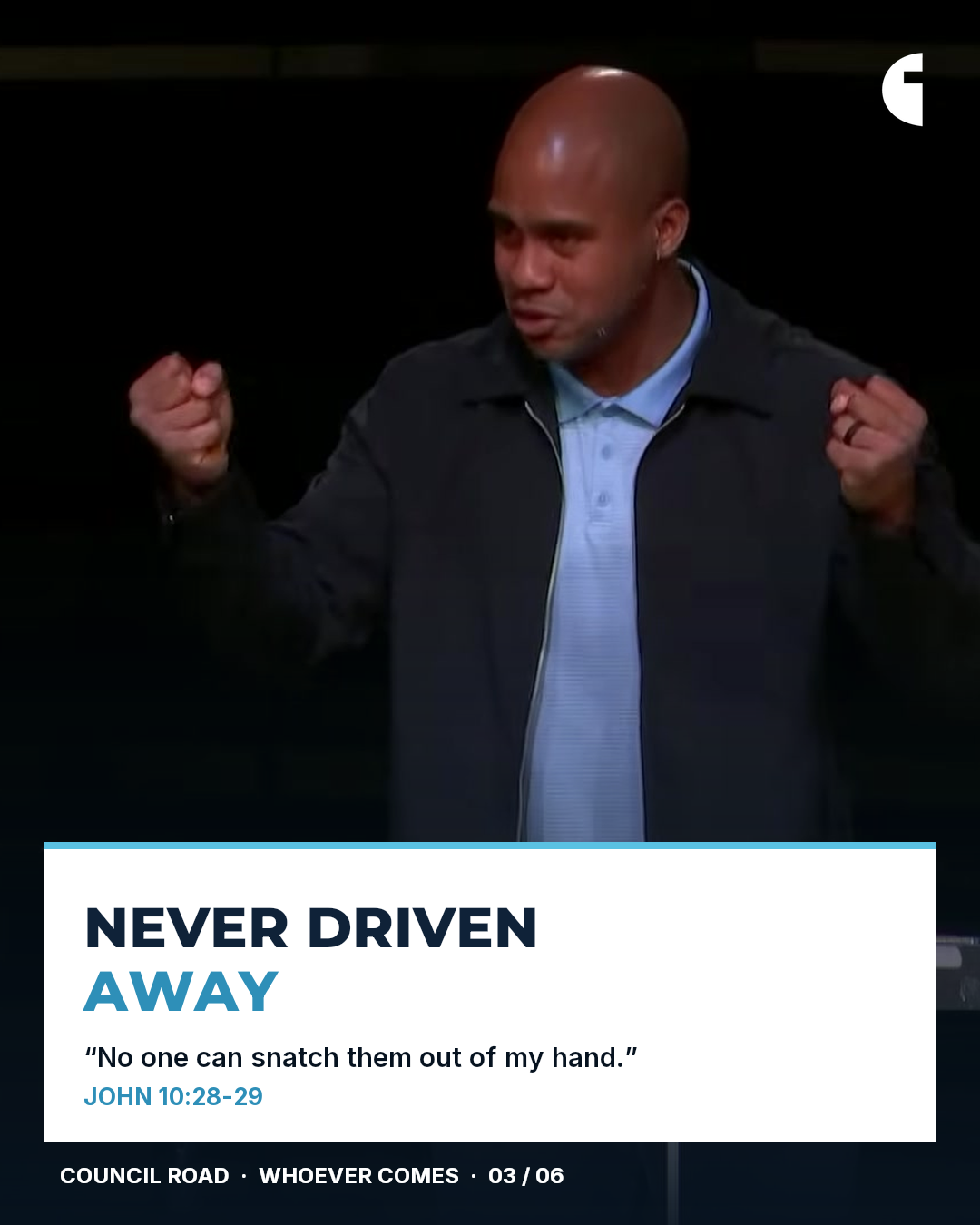
The security half got the same treatment. The double negative in the Greek — never, never driven away — the two hands of John 10, the God of Jude who is able to keep you from stumbling. And then, the most human minute of the morning: a pastor mid-adoption, admitting he yields the same worry to God every morning and picks it back up by lunch. Wrestling, he called it. Not wandering. The promise isn’t for people who never struggle; it’s for people who struggle in the grip.
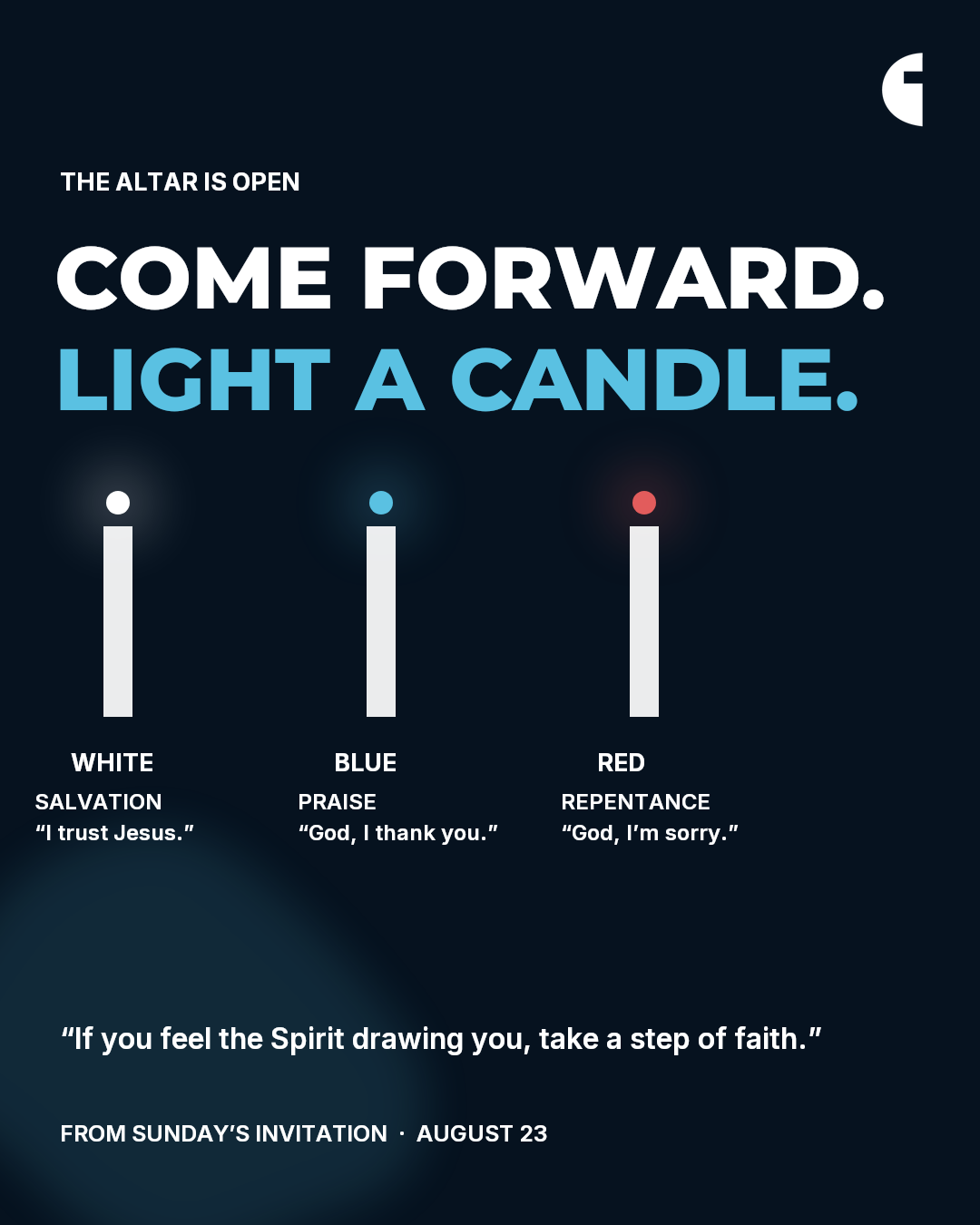
The altar had candles. White for salvation, blue for praise, red for repentance — and people came down for all three. That’s the part no commentary captures. A room full of people who had just heard the most contested verb in the New Testament got up out of their seats and acted on the least contested one: whoever comes. Some came to believe. Some came to say thank you. Some came to stop hiding.
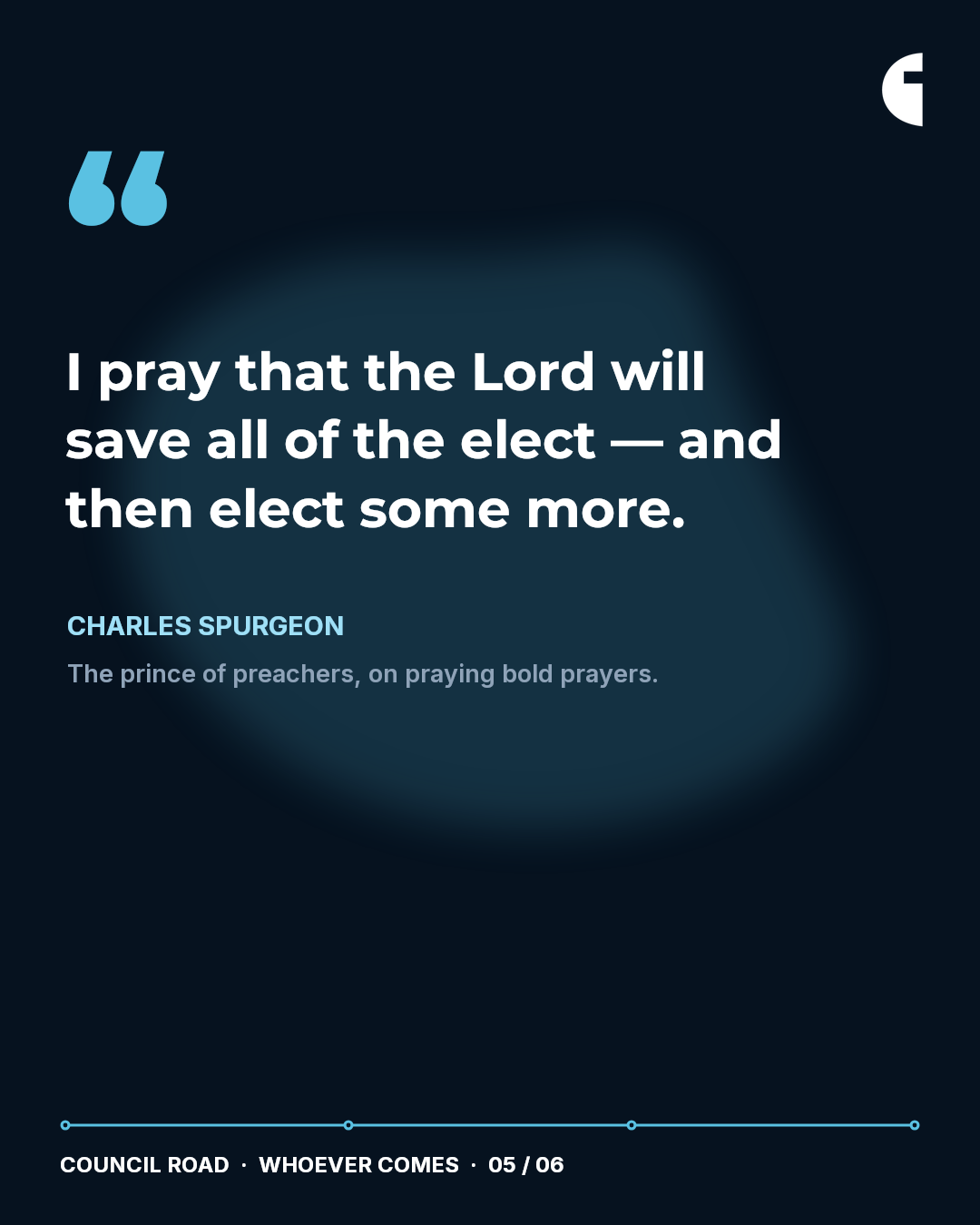
Spurgeon got the last word, the way he often does. The prince of preachers, a committed Calvinist, feared he wasn’t a very good one — because he prayed for God to save all of the elect, and then elect some more. You don’t have to solve what Spurgeon meant. You just have to notice the posture: a man so taken with the invitation that he prayed past its edges. Whether they come was never our assignment. Handing them the invitation is. Why can’t whoever be you — and why can’t you be the one who asks?
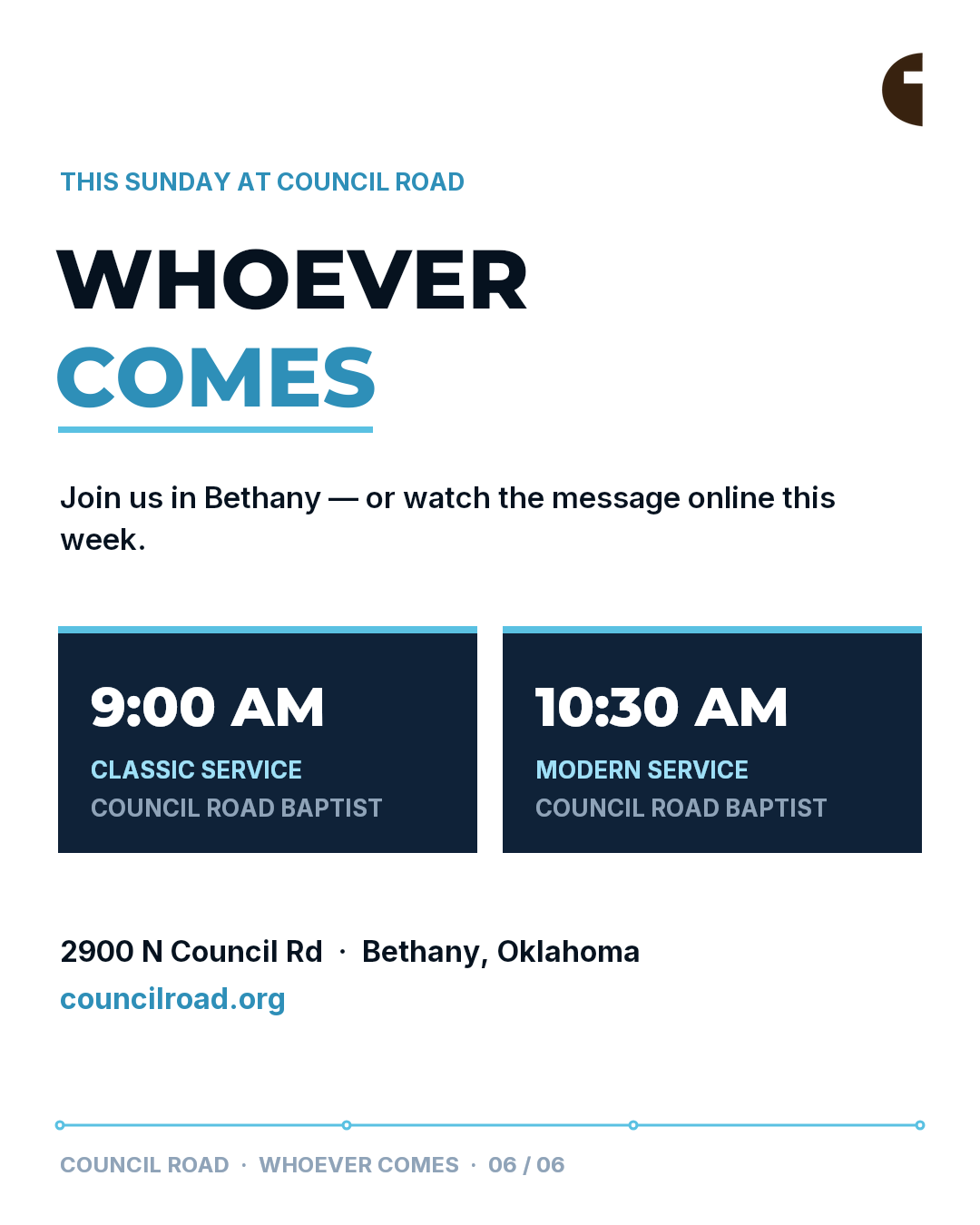
A sermon-derived reflection on the August 23, 2026 message at Council Road Baptist Church, Bethany, Oklahoma — written by Vessel Media as an independent content concept. Scripture quotations from the NIV. Watch the full message on Council Road’s YouTube channel.