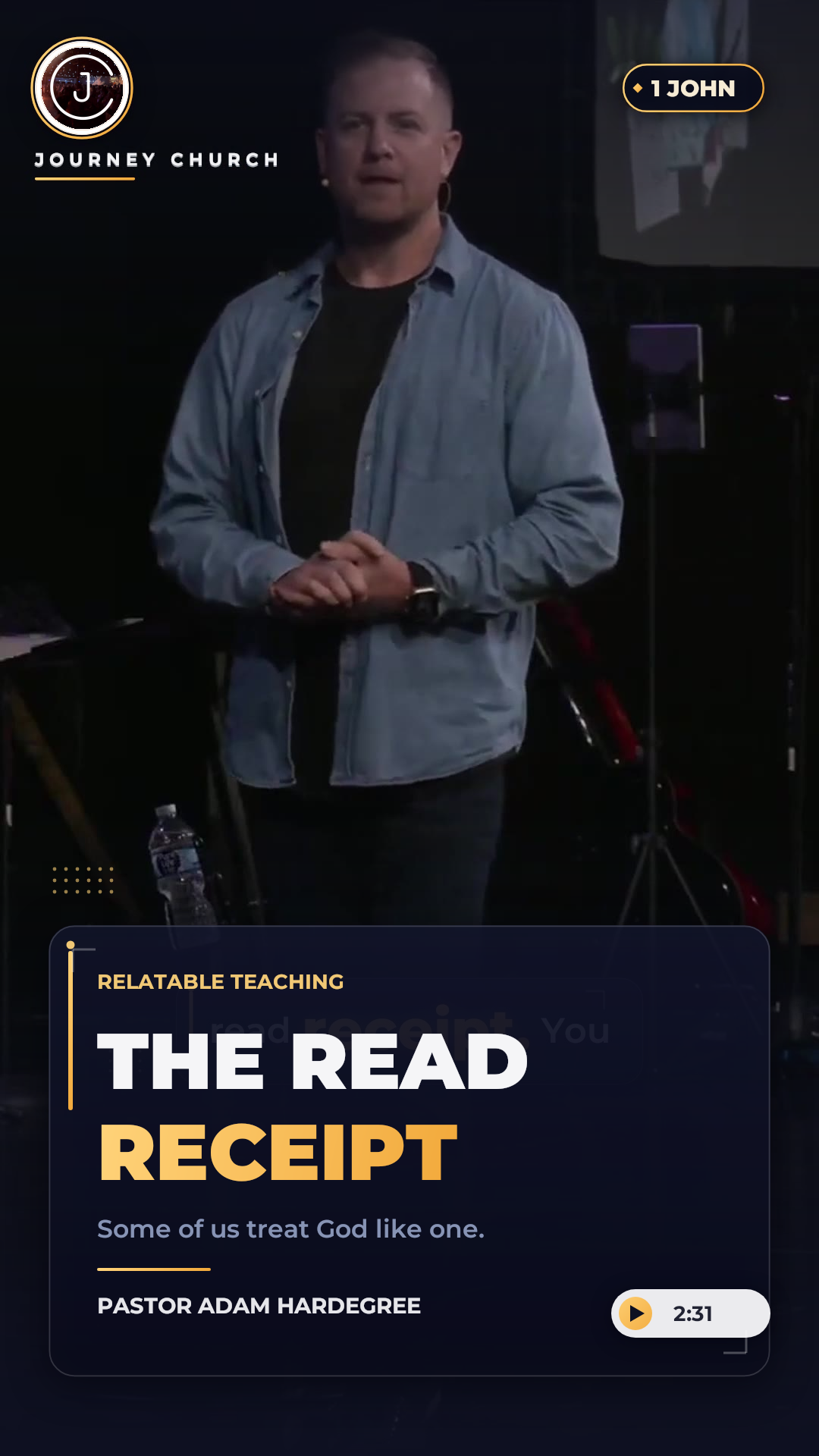


There is a particular kind of quiet that follows an unanswered prayer, and it does not feel like peace. It feels like a phone. You sent the words. The screen told you they arrived. And then nothing, day after day, until you stopped checking. Most Christians will not say this out loud in a church lobby, but almost all of us have lived some version of it. We prayed about the thing that mattered most, and heaven felt like a read receipt.
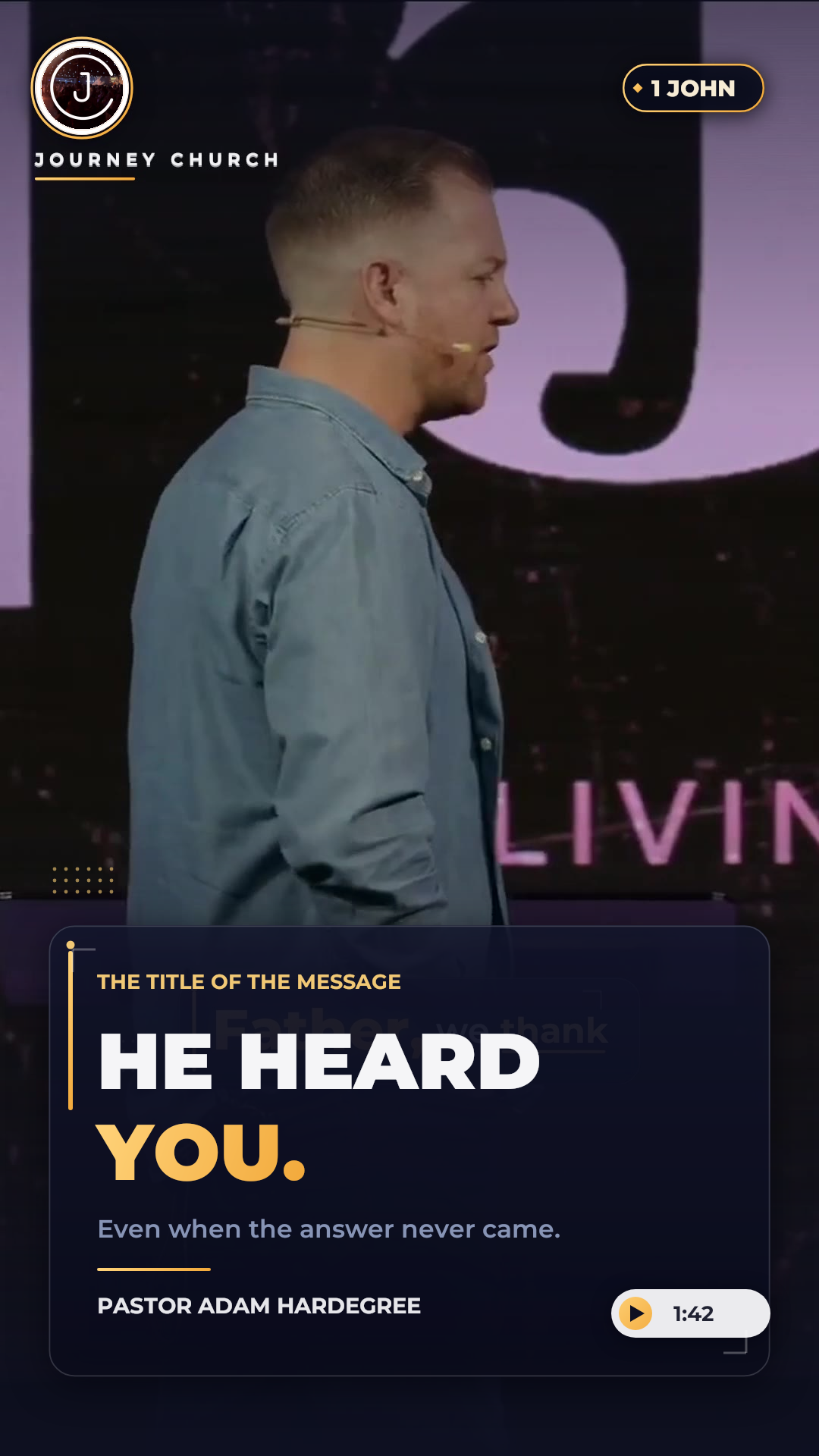
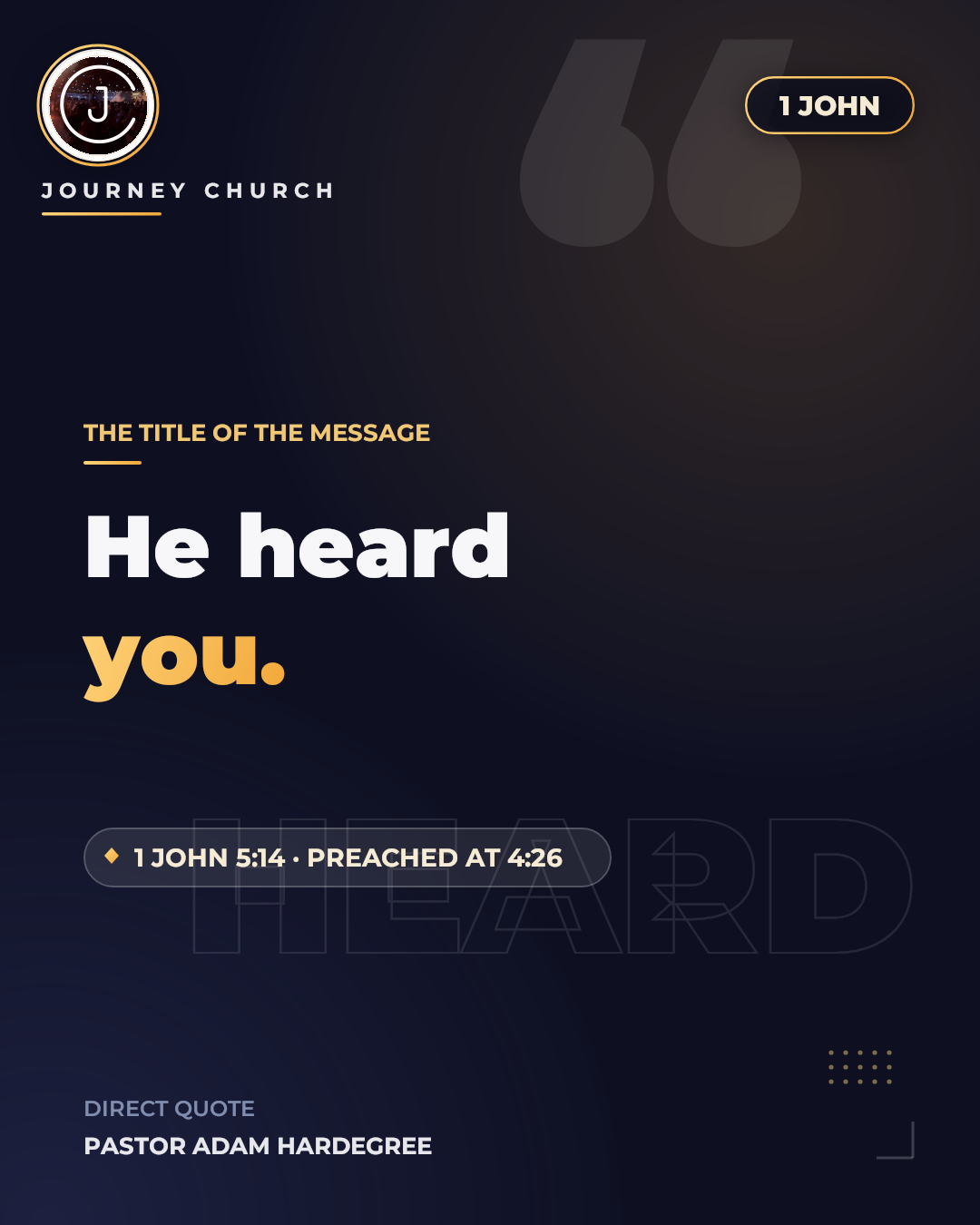
Pastor Adam Hardegree built an entire message for the people carrying that feeling, and he did not start with an explanation. He started with a declaration. He heard you. Even in the moments where you prayed a prayer and it was not answered the way you had hoped. Four words, given to a room full of people who needed them more than they needed an outline, and then forty minutes of showing why the four words are not wishful thinking.
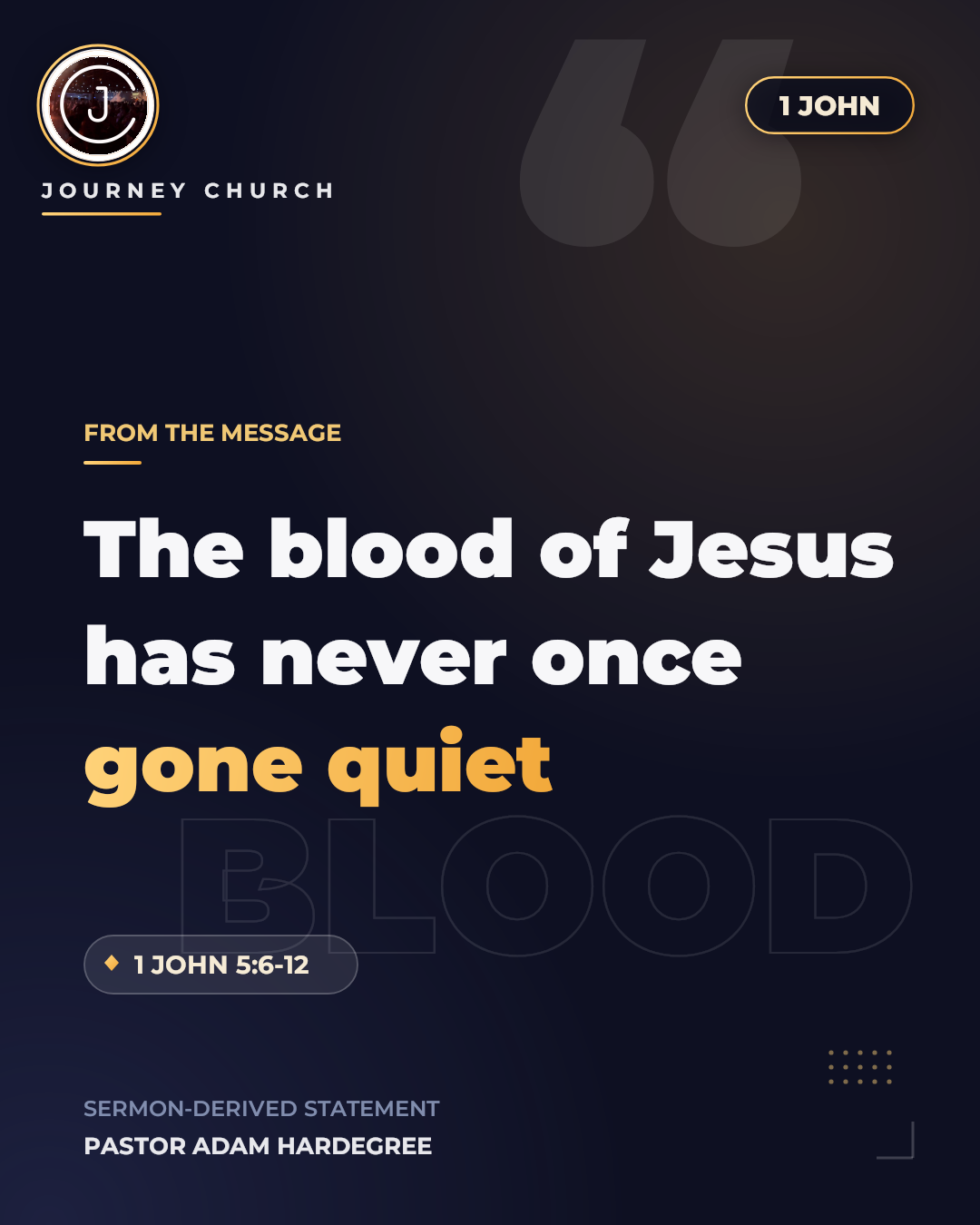
The case is built like a courtroom, because that is how John wrote it. First John 5 calls three witnesses to the stand: the water, the blood, and the Spirit. The water of Jesus’ baptism, where heaven spoke over him before he had done a single miracle. The blood of his cross, where the work was finished. The Spirit, who agrees with both. And then the preacher landed on the sentence that I have not been able to put down all week: the blood of Jesus has never once gone quiet on your behalf.
Sit with that for a second, because it rearranges the whole furniture of prayer. In Genesis, after Cain killed his brother, God said Abel’s blood was crying out to him from the ground. A voice that would not stop. The writer of Hebrews picks that image up and says the sprinkled blood of Jesus speaks a better word than Abel’s. Better how? Abel’s blood cried for justice. Jesus’ blood cries for you. It has been speaking since the cross, and it does not pause when your quiet times get irregular, and it does not go hoarse in your worst season. When you pray, a testimony is already talking about you before you finish your first sentence.
"The blood of Jesus has never once gone quiet on your behalf."
If the message had stopped there, it would have been a good Sunday. It did not stop there. The second movement went looking for the people whose prayers are still in transit, and it found Elijah. Not the stained-glass Elijah. James 5:17, the one with a nature like ours, the prophet who once ran into the desert so depressed he asked God to let him die. That man prayed and the sky closed for three and a half years. He prayed again and the sky opened. James tells that story specifically so that no one gets to say prayer only works for special people. A nature like ours. The same word that describes your anxiety and your short temper and your doubt at two in the morning.
And the message was honest about the waiting, which is where most sermons about prayer get sentimental and lose their audience. Elijah prayed seven times before his servant saw the first cloud, and the first six reports were clear horizons. Six times, nothing. The seventh time, a cloud the size of a fist. The pastor’s point was not that everyone gets their rain on schedule. It was that delay is not the same as deafness, and that the size of what you see on the horizon is not the size of what God is doing about it.
Then the message did the bravest thing a sermon about prayer can do. It talked about the no.
Adam Hardegree stood in front of his church and said that his mom died of cancer when he was five years old. There is no way to soften that sentence, and he did not try. Whatever a family prays in a season like that, the answer that came was the one nobody wanted, and he has carried the empty chair for decades. He said something about it that I keep thinking about. I will see her again. Not a slogan. A man who has been rehearsing that sentence his whole life, saying it out loud, in front of everyone, as an actual expectation.
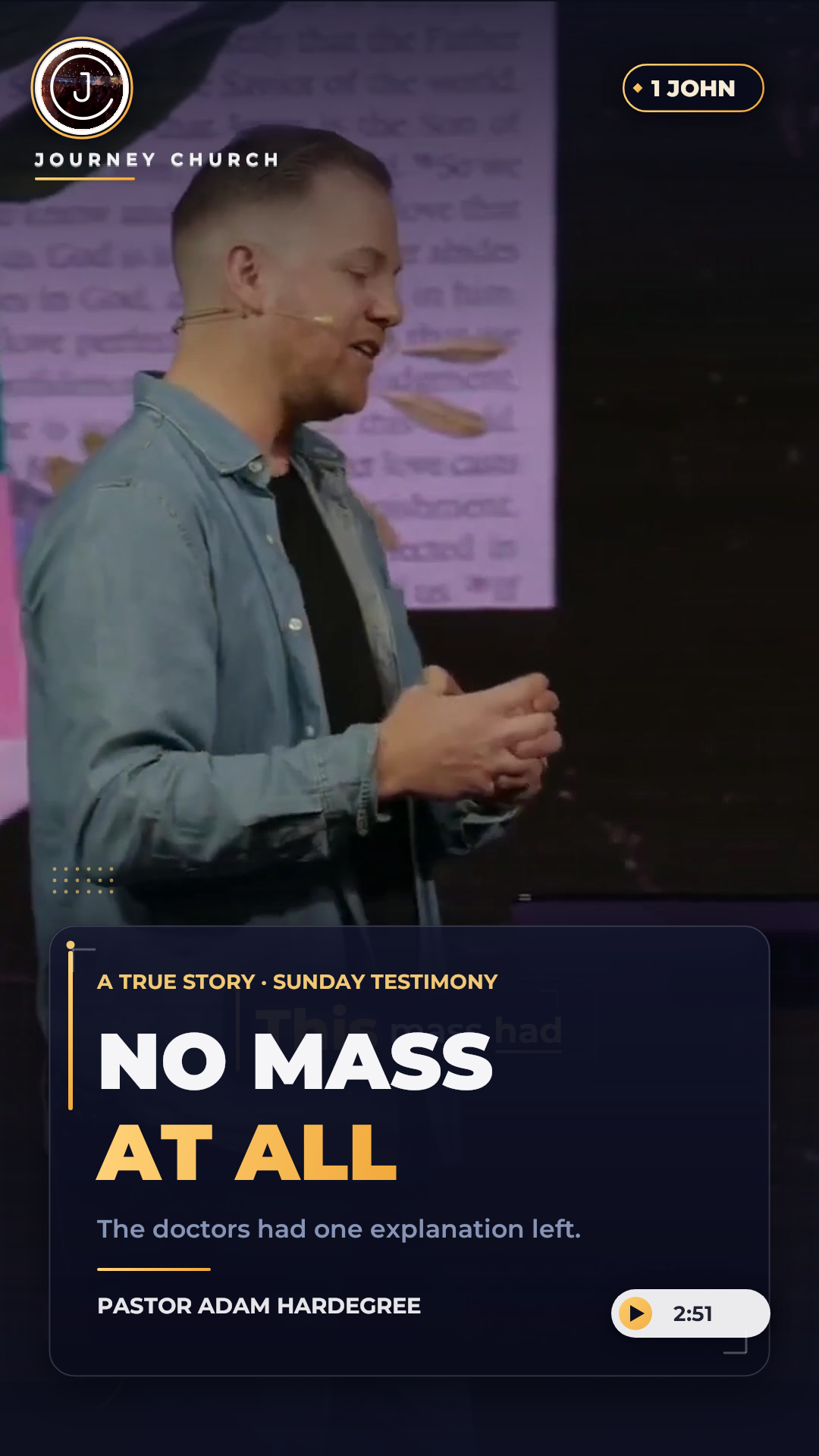
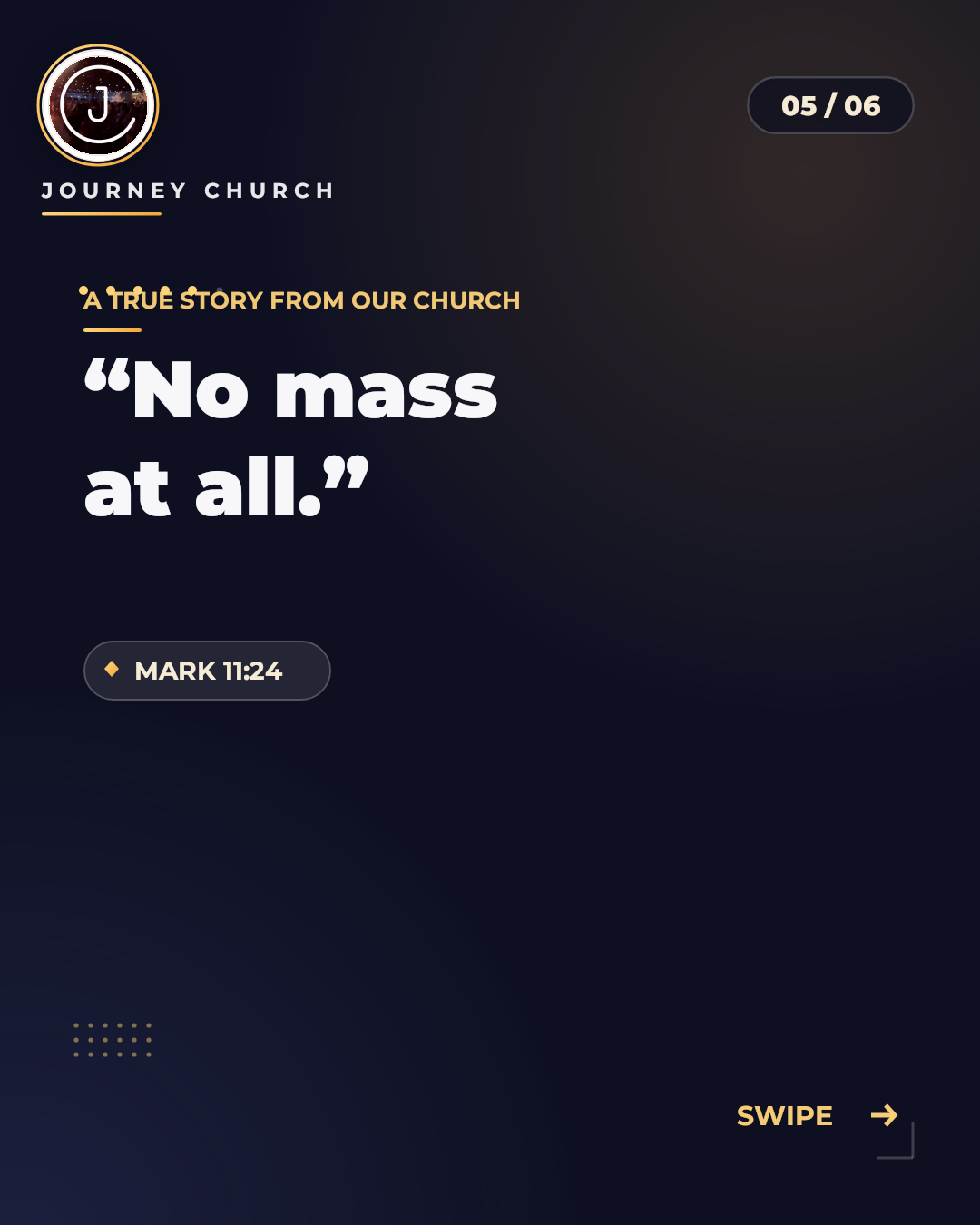
And then, because the same God who allows nos also destroys masses, he told the other story. Eight years ago his sister was pregnant, and the diagnosis that came gave that baby almost no hope. The medical explanation left one outcome. The family prayed. The church, in its various circles, prayed. And the story ended the way testimonies should always be told, in his words, with a text message in all capital letters. No mass at all. God destroyed that mass. It is a proven miracle. You could hear the room take a breath together when he said it, the sound of a church remembering that the God they read about in Acts is not on a break.
Here is what holds those two stories together, and it is not an explanation, because no explanation survives contact with a five-year-old’s front row at a funeral. What holds them together is a Father who hears every prayer and answers from a vantage point we do not have yet. Jesus himself asked for the cup to pass. The answer was still the cross. And the cross, the worst no in history on Friday, turned out to be the greatest yes ever spoken by Sunday. Paul begged three times for his thorn to leave. He got no removal and yes grace, and two thousand years later the grace has outlasted every explanation. Revelation closes the whole story with a promise that covers every prayer heaven ever heard: a day is coming with no more death, no more crying, no more of the things we pray hardest against. Every yes that never arrived here is scheduled there.
The message ended with a key. Prayer is the key that unlocks the resources of heaven, the pastor said, and he guarded the sentence carefully. Prayer does not inform God, as if he reads the news after we forward it to him. Prayer does not twist his arm. But the Father has chosen, freely, to run his resources through the asking of his children, and James 4:2 names what happens when we stop: you do not have, because you do not ask. Most of us did not decide to stop praying about the thing. We just stopped, the way you stop texting someone who never replies, and we called it peace. Jesus said his house would be called a house of prayer. The family business of the people of God is asking.
So here is the week, in one paragraph. He heard you, and the blood has never stopped saying so. Delay is not deafness, so pray again about the fig tree that has looked dead for years. If the answer was no, bring the ache to the Father who watched his Son ask for the cup to pass, and hold on to the scheduled yes of eternity. And if you quietly retired a request sometime in the last few years, this is your invitation to take it back off the shelf. The line was never dead. Heaven did not miss a word. It never has.